
For a while, I kept recommending the same book to everyone who asked.
“Just start with Aurelien Geron,” I’d say. Hands-on, practical, gets you running code fast. I said it so many times, I stopped questioning it. Someone joins a Discord, asks about learning ML, and I’d drop the recommendation before they finish typing.
Then someone came back three months later. They’d gone through most of the book. Could run a random forest. Tune hyperparameters. Clean notebooks, everything.
No idea what was happening inside any of it.
“I can use these tools,” they said. “But I feel like I’m just pressing buttons.”
I didn’t have a good answer because I’d felt that way too, longer than I’d admitted.
That gap between running models and actually understanding them is where most people get stuck. The problem isn’t too few books. It’s that the most recommended ones were built for someone who wants results before understanding. That works for a while. Then it stops working.
This isn’t a list of books to collect. It’s a map for which book to read at which stage of confusion.
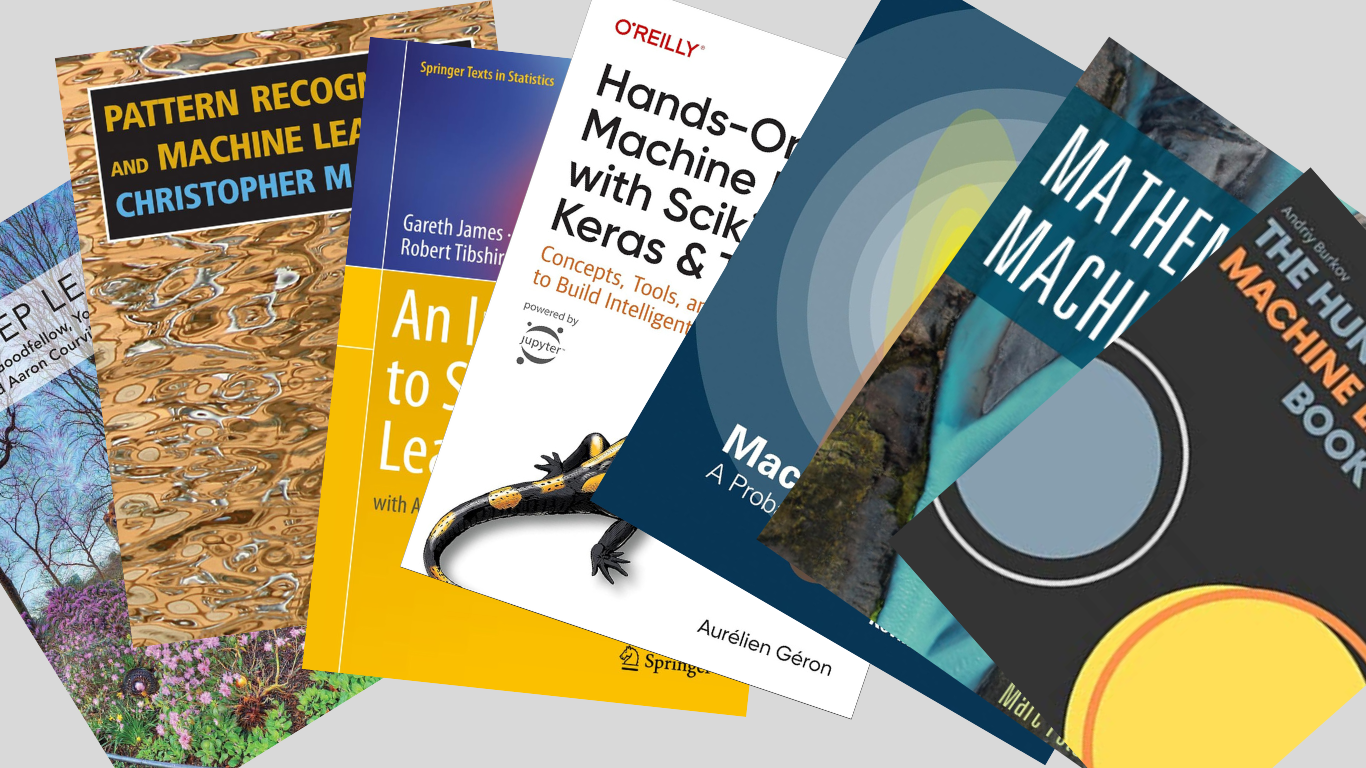
If you’re looking for the best machine learning books for beginners, these seven cover the practical tools, the math foundations, and the deeper theory behind modern ML.
Quick List
- Hands-On Machine Learning Aurelien Geron
- The Hundred-Page Machine Learning Book Andriy Burkov
- Mathematics for Machine Learning Deisenroth, Faisal, Ong
- Introduction to Statistical Learning James, Witten, Hastie, Tibshirani
- Pattern Recognition and Machine Learning Christopher Bishop
- Machine Learning: A Probabilistic Perspective Kevin Murphy
- Deep Learning Goodfellow, Bengio, Courville
Best For Quick Reference
| Goal | Book |
| Absolute Beginners | Hands-On Machine Learning (Aurélien Geron) |
| Understanding the Math | Mathematics for Machine Learning (Deisenroth, Faisal, Ong) |
| Deep Learning | Deep Learning (Goodfellow, Bengio, Courville) |
| Short Overview | The Hundred-Page Machine Learning Book (Andriy Burkov) |
If You Only Read One Book
Start with Hands-On Machine Learning by Aurelien Geron. Real Python, real datasets, actual pipelines. No heavy theory upfront. You learn by building things.
When the “why does this actually work” question starts bothering you, and it will, that’s when Mathematics for Machine Learning by Deisenroth becomes the next step. Not before.
Pick Geron first. Everything else follows.
What Background You Need Before Starting
Nobody answers this clearly, so here it is.
For Geron and Burkov: Basic Python loops, functions, NumPy, pandas. High school algebra. Statistics help, but you can pick them up as you go.
For Deisenroth and ISLR: Comfortable with algebra and basic calculus. Not exam level, just enough that “matrix multiplication” doesn’t make you close the book.
For Bishop, Murphy, and Goodfellow: Linear algebra, probability theory, and multivariate calculus with actual fluency. If those feel distant, start with Deisenroth first. Jumping to Bishop without this background isn’t hard; it’s just pointless. Nothing sticks.
Starting from zero? Learn basic Python for a few weeks. Then open Geron. Don’t wait until you feel ready. That feeling doesn’t arrive.
Do You Even Need a Book Right Now?
Probably not, if you’re mid-course. Most structured ML courses, such as fast.ai, Andrew Ng’s Coursera sequence, and Google ML crash course, are self-contained. Stacking a book on top just splits your attention.
Books make sense when:
- A course left something genuinely unclear, and you want to go deeper on that specific thing
- You’ve finished a course and want the math underneath it
- You’re preparing for interviews where surface-level knowledge fails you
- You need something offline
If none of those are true, go back to your course.
The ML Book Learning Path
Python Basics
↓
Hands-On Machine Learning (Aurélien Geron)
↓
The Hundred-Page Machine Learning Book (Andriy Burkov)
↓
Mathematics for Machine Learning (Deisenroth, Faisal, Ong)
↓
Introduction to Statistical Learning (James, Witten, Hastie, Tibshirani)
↓
Pattern Recognition and Machine Learning (Christopher Bishop)
OR
Machine Learning: A Probabilistic Perspective (Kevin P. Murphy)
↓
Deep Learning (Goodfellow, Bengio, Courville)Most people don’t follow this top to bottom. They jump in where they’re stuck. But if you’re starting from zero, this order avoids the most common wrong turns.
All 7 Books at a Glance
| Hands-On Machine Learning – Geron | Practical ML | Beginner | You want to start ML by building real models in Python |
| Hundred-Page ML Book – Burkov | Overview | Beginner | You want a quick mental map of the whole ML field |
| Mathematics for ML – Deisenroth | Math foundations | Intermediate | ML math (linear algebra, calculus) keeps confusing you |
| Introduction to Statistical Learning – James et al. | Statistical ML | Intermediate | You want to understand why models work, not just use them |
| PRML – Bishop | Theory | Advanced | You want a deep theoretical understanding of ML algorithms |
| ML: Probabilistic Perspective – Murphy | Comprehensive ML | Advanced | You want a full research-level view of machine learning |
| Deep Learning – Goodfellow | Neural networks | Advanced | You want to understand neural networks and deep learning theory |
Best Machine Learning Books for Beginners
1. Hands-On Machine Learning with Scikit-Learn, Keras, and TensorFlow Aurelien Geron
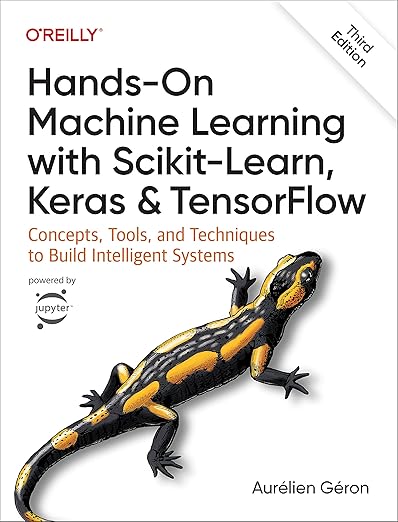
What it is: A practical guide to building ML systems in Python. Not a theory book. You will write a lot of code.
Why it matters: Covers the full pipeline data cleaning, feature engineering, model training, evaluation, and deployment basics. The examples are real. The code runs.
Who it’s for: Someone who knows basic Python and wants to build things fast. Better for people who learn by doing than by understanding.
The trade-off: You’ll finish knowing how to use tools without fully knowing why they work. The math is minimal. Deliberately.
Failure point: Treating this as the complete picture. It isn’t. If a job asks you to explain gradient descent or derive a loss function, this book alone leaves you exposed.
What to ignore: Reading cover to cover before touching code. Open a notebook, run the examples, break things.
Reduction: Best first book. Not enough on its own.
Get this book on Amazon: United States | India
2. The Hundred-Page Machine Learning Book Andriy Burkov
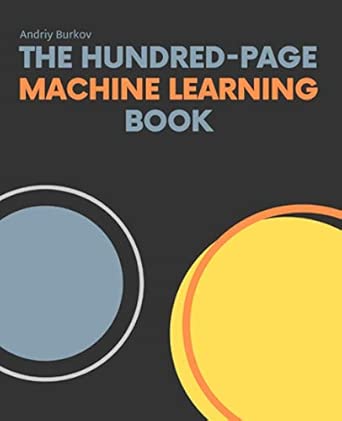
What it is: A genuinely short book. Under 150 pages. Dense in a good way.
Why it matters: Most ML books are bloated. This one isn’t. Covers SVMs, neural networks, and decision trees at interview-prep level or for someone wanting a clean mental map before going deeper.
Who it’s for: People with some exposure who want a coherent overview, not a tutorial. Also useful when returning to ML after a gap.
The trade-off: Short means it assumes you’ll look things up. It’s a map, not a territory.
Failure point: Treating brevity as depth. It’s not deep. It’s efficient. Two different things.
Constraint: Pay-what-you-can from the author’s website. No excuse not to have it.
Reduction: Read this after your first course. It organizes everything you half-learned.
Check latest price on Amazon: United States | India
Best Machine Learning Books for Math Foundations
3. Mathematics for Machine Learning Deisenroth, Faisal, Ong
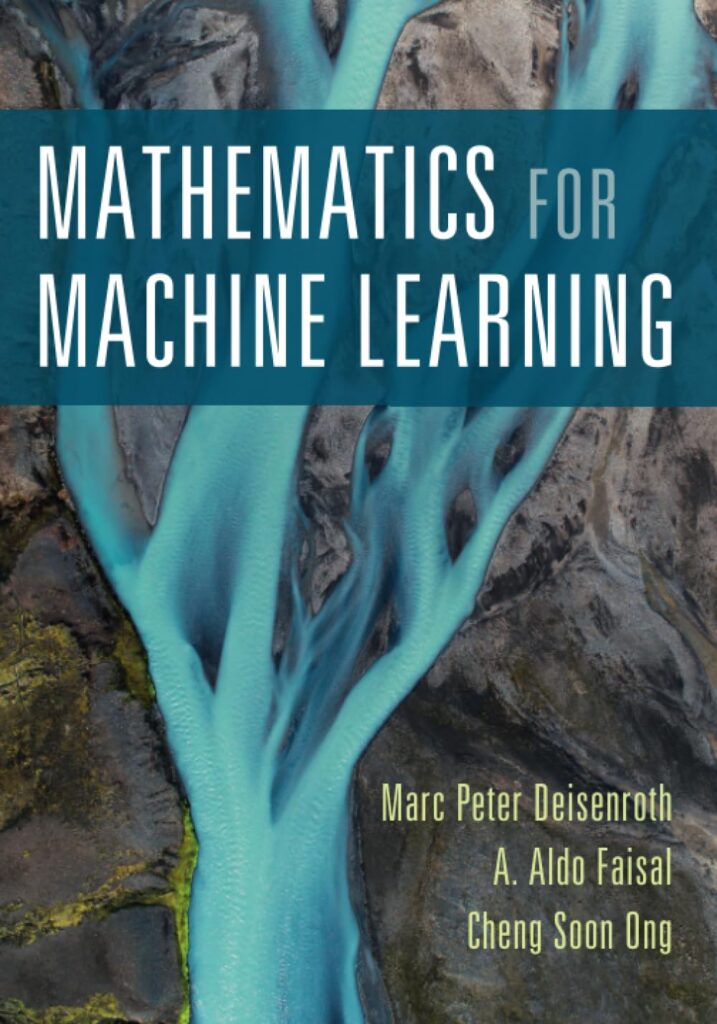
What it is: A free textbook covering linear algebra, calculus, probability, and optimization specifically built around ML applications.
Why it matters: Most ML learners hit a wall in the math. This book was built for that exact wall. Probably the most useful book on this list, yet it gets the least attention.
Who it’s for: Someone who studied math in engineering but has forgotten it, or someone who keeps bouncing off papers because the symbols don’t make sense.
The trade-off: Dry. Not a casual read. Takes real effort.
Failure point: Downloading it, not opening it, continuing to feel lost when math appears. Extremely common.
Constraint: Free PDF from the authors. Cambridge paperback costs around ₹800–₹1,200 in India.
Reduction: If math is your bottleneck, this is the only book you need right now. Everything else waits.
Get this book on Amazon: United States | India
4. Introduction to Statistical Learning, James, Witten, Hastie, Tibshirani
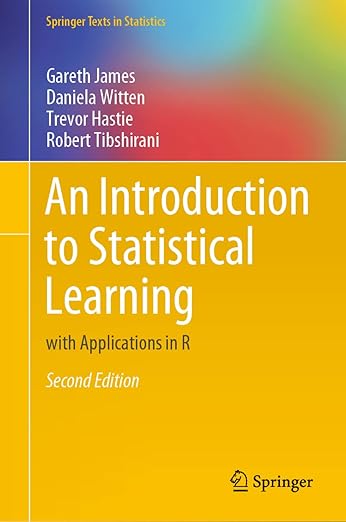
What it is: A statistics-first introduction to ML. Lighter on code, heavier on understanding why models behave the way they do.
Why it matters: Explains why models work before worrying about implementation. Bias–variance trade-off, cross-validation, model selection: most people learn these things by accident and treat them as first principles here.
Who it’s for: Someone who can build models in Geron but finds explanations like “regularization reduces overfitting” frustratingly thin. This book gives those explanations actual weight.
The trade-off: Weak on deep learning. If neural networks are your main interest, this won’t serve you well there. But what it teaches applies everywhere else.
Failure point: Skipping it because it looks like a statistics textbook. It is one, and that’s the point. ML borrowed heavily from statistics but mostly forgot to mention it.
Constraint: Free PDF at ISLR.org. R is the main language, but Python labs were added recently.
Reduction: The best bridge between practical ML and mathematical ML. Read this before Bishop.
Get this book on Amazon: United States | India
Best Machine Learning Books for Going Deeper
5. Pattern Recognition and Machine Learning Christopher Bishop
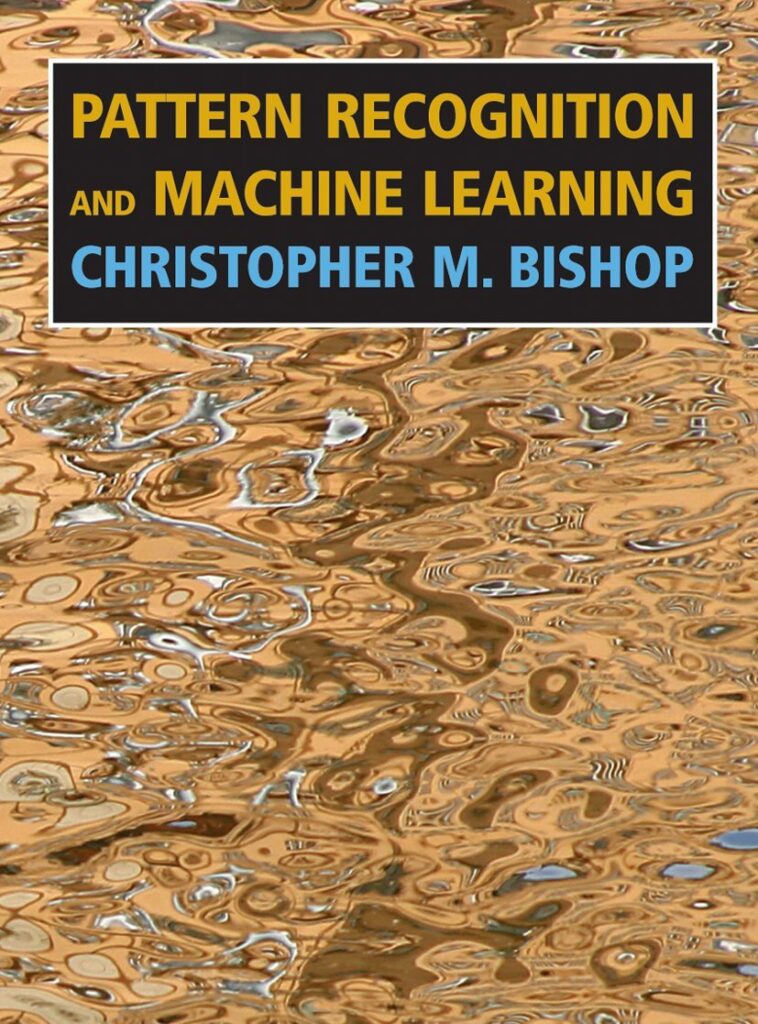
What it is: A graduate-level textbook. Dense, rigorous, Bayesian in framing.
Why it matters: This separates people who understand ML from people who use ML. Every model is derived, not handed to you. Treats the whole subject as applied probability theory.
Who it’s for: Someone who has finished a practical course, can write ML code without hand-holding, and wants to understand what’s underneath.
The trade-off: Not for beginners. Some people spend a year on this, seriously.
Failure point: Starting too early. If basic probability notation is uncomfortable, you’ll bounce off Chapter 1 and feel stupid. That’s not your fault; come back after Deisenroth and ISLR.
Constraint: Expensive physically. Legal PDFs exist. Needs a real math background.
Reduction: Don’t rush here. But when you’re ready, it’s clarifying in a way few other books are.
Get this book on Amazon: United States | India
6. Machine Learning: A Probabilistic Perspective Kevin P. Murphy
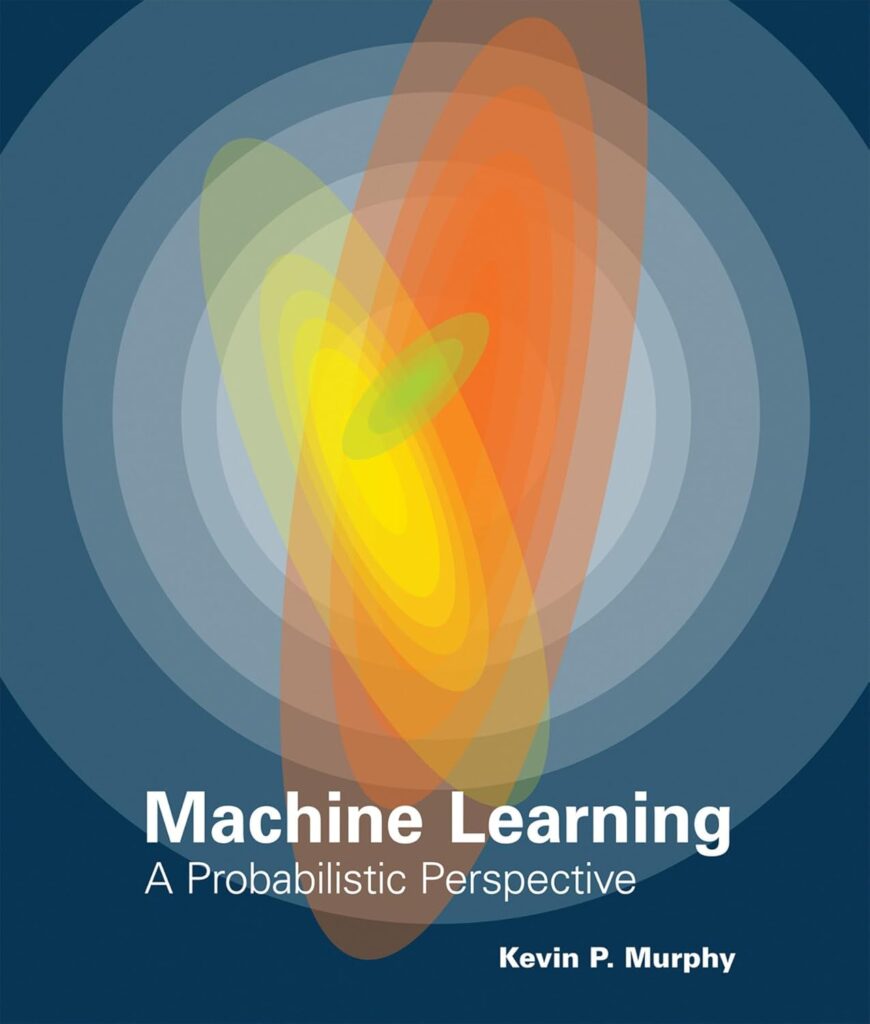
What it is: One of the most comprehensive ML textbooks written. Over 1,000 pages. Bayesian methods, graphical models, inference, deep learning foundations, all of it.
Why it matters: For when you want the full picture. A proper treatment of ML as a unified probabilistic framework. If you’ve looked at a research paper and felt the symbols came from a different universe, this book is building that universe.
Who it’s for: Not a beginner book, despite appearing on many beginner lists. For researchers, PhD-track students, and engineers who want to understand the field at a principled level.
The trade-off: Requires time, math, and patience in equal measure.
Failure point: Treating it as something to casually flip through. Work through it ideally with a study partner because some sections assume a significant background.
Constraint: Murphy released a newer two-volume set, Probabilistic Machine Learning: Introduction and Advanced Topics, both free as PDFs. More accessible, still rigorous. Know these exist before buying the older edition.
What to ignore: The pressure to finish it. Nobody finishes this book. You read the chapters relevant to what you’re working on.
Reduction: Grow into this over the years, not months. If you’re at the beginning, bookmark it.
Get this book on Amazon: United States | India
7. Deep Learning Goodfellow, Bengio, Courville
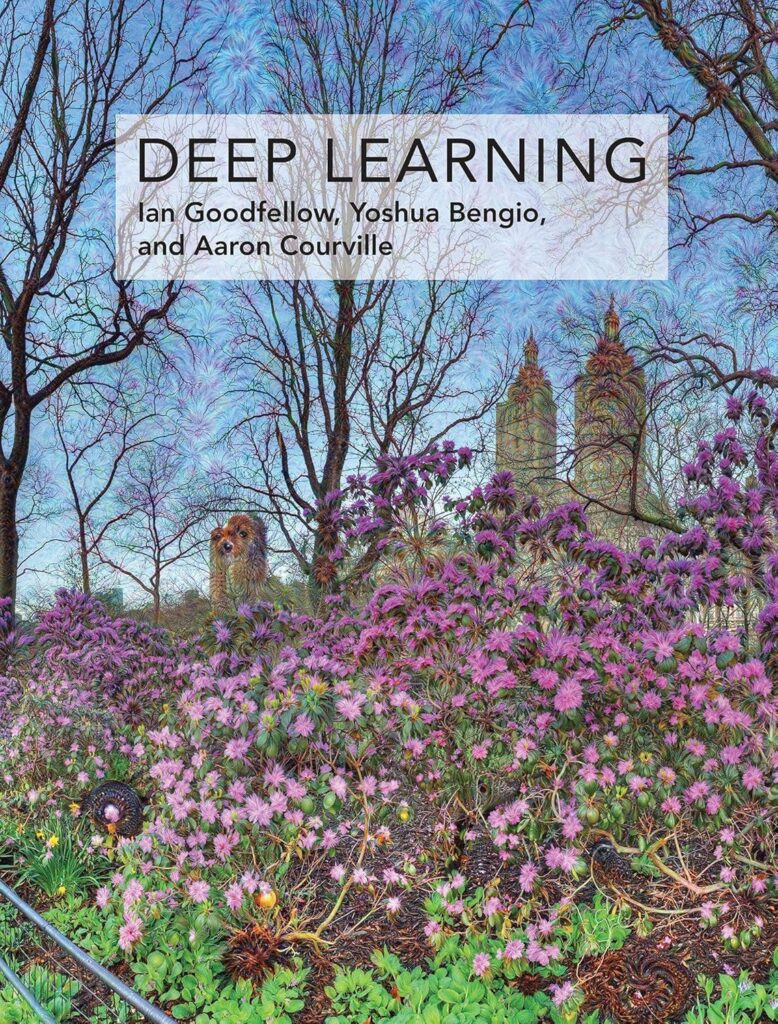
What it is: The canonical deep learning textbook. Backpropagation, regularization, optimization, convolutional networks, and sequence models all from first principles.
Why it matters: Before every YouTube tutorial and Hugging Face demo, this was the reference. Parts I and II still hold up completely.
Who it’s for: Someone who wants to understand deep learning at the level research papers assume.
The trade-off: Parts are dated. Transformers are barely covered. Part III has been partially superseded. Parts I and II have not.
Failure point: Reading Chapter 1 linearly. This is a reference book. Go to the chapter you need.
Constraint: Free at deeplearningbook.org. Don’t pay for a PDF.
Reduction: Parts I and II. That’s the book. Part III is the historical context now.
Check latest price on Amazon: United States | India
Some links in this article may be affiliate links. If you buy through them, it helps support the site at no extra cost to you.
Free Resources to Pair With These Books
Books work better alongside something active.
With Geron: fast.ai’s Practical Deep Learning course. Code-first, opinionated, covers similar ground from a different angle. Running both creates useful repetition without feeling redundant.
With Deisenroth and ISLR: 3Blue1Brown’s Essence of Linear Algebra and Essence of Calculus on YouTube, the clearest visual introductions that exist. Stat Quest with Josh Starmer handles statistics with unusual clarity.
With Bishop and Murphy: No shortcuts. MIT OpenCourseWare and Stanford’s CS229 notes cover much of the same theory, more accessibly, with problem sets worth doing.
With Goodfellow, Andrej Karpathy’s neural network lectures on YouTube are the best practical supplement to the theory. Use the exercises on deeplearningbook.org; they’re underused.
Every book marked “Yes” in the table above is legally free as a PDF from the authors’ own pages. You don’t need to pay for any of them to start today.
You downloaded the Murphy PDF six months ago. Opened it twice. Closed it when the notation got dense.
It’s still there.
At some point, you’ll open it again. And this time the symbols will make a little more sense.
Frequently Asked Questions
Which is the best machine learning book for absolute beginners with no math background?
Start with Geron’s Hands-On Machine Learning. It assumes basic Python, not heavy math. Once you can build and run models comfortably, fill the math gaps with Deisenroth. That order works better than trying both at once.
Is the Hundred-Page Machine Learning Book enough to get a job in ML?
No. Useful for organizing scattered knowledge, but not deep enough for most ML roles. Interviewers at serious companies ask you to explain things that this book only names. A map, not a preparation guide.
Should I read Bishop or Murphy? What’s the difference?
Both graduate-level, both Bayesian in framing. Bishop is more focused and easier to navigate. Murphy is more comprehensive and more demanding. First time through, start with Bishop. Murphy makes more sense once you’ve already covered the territory once.
Is Introduction to Statistical Learning still relevant in 2026?
Yes, for foundations. Bias–variance trade-off, cross-validation, regularization, and model selection haven’t changed. What ISLR doesn’t cover is deep learning and anything post-2015. Use it for fundamentals, then move to Goodfellow for neural networks.
Can I learn machine learning from books alone, without a course?
Technically yes. Practically harder. Books don’t give you structured exercises, pacing, or feedback. Most people do better starting with a course from Ng’s Coursera or fast.ai and using books to fill specific gaps. If you’re self-disciplined with a math background, Geron, with active coding practice, can take you surprisingly far.
Related Posts 📌
7 Best Data Science Books for Beginners (2026)
Top 7 AI Books to Read in 2026 That Truly Shape How You Think, Build & Decide

