
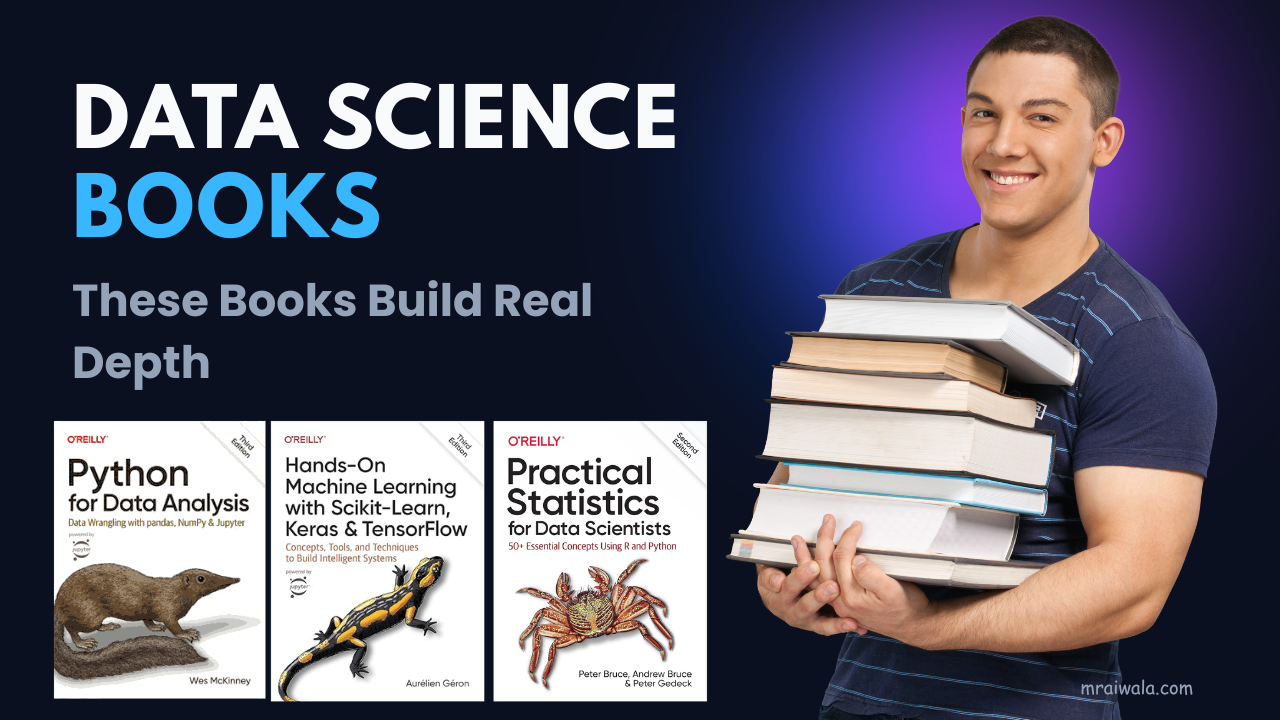

The interview feedback email was short: “Strong enthusiasm, but lacks depth in fundamentals.”
Eight months of learning. Nights, weekends, one cancelled trip. I could run models, explain overfitting, and show certificates. Still, four questions later, it wasn’t enough.
I wasn’t looking for motivation. I’d read enough “you can do it” posts. I needed clarity for that stage where tutorials stop helping and documentation still feels out of reach.
If you’re trying to switch into data science, this is where most people get stuck. Not because they’re lazy, but because they’re missing depth.
You’ve done a Python course, maybe two. You know what a DataFrame is. You’ve trained a model and watched the accuracy go up. But when something breaks, you don’t know where to look or why it failed.
Then you hit job descriptions asking for “strong statistical foundations” and “production ML experience.” It feels like showing up at the ocean with a paper boat.
That gap is real, and almost no one talks about it. Courses teach you steps, but they don’t teach you how to reason through a problem when the steps stop working.
At that point, books were the only thing that slowed me down enough to actually understand what I was doing. Not all books, specific ones for specific gaps.
Books that don’t just show you what to do, but help you understand why it works and what to do when it doesn’t.
These are the Data Science Books 2026 that actually made a difference.
The data science books in 2026 aren’t the ones everyone recommends first
They’re usually the second or third recommendation. After someone has tried the obvious ones and come back with a more honest question.
What I’m selecting for here: not comprehensiveness, not prestige, not what gets upvoted most on forums. I’m selecting for what actually closes the gap between someone who knows syntax and someone who can work on a real problem.
That’s a different filter. It cuts some famous books out. It includes a few that don’t show up on typical lists.
Quick List: Best Data Science Books in 2026 to Switch Careers
- An Introduction to Statistical Learning statistical foundations
- Python for Data Analysis: Working with real datasets
- Hands-On Machine Learning with Scikit-Learn, Keras & TensorFlow full ML pipeline
- Practical Statistics for Data Scientists practical statistics intuition
- Designing Data-Intensive Applications data systems & Pipelines
- Machine Learning Engineering production ML
- Storytelling with Data: Communicating Results
1. An Introduction to Statistical Learning: Best Book for Data Science Statistics
James, Witten, Hastie, Tibshirani (Stanford and UW professors, authors of the graduate-level bible Elements of Statistical Learning)
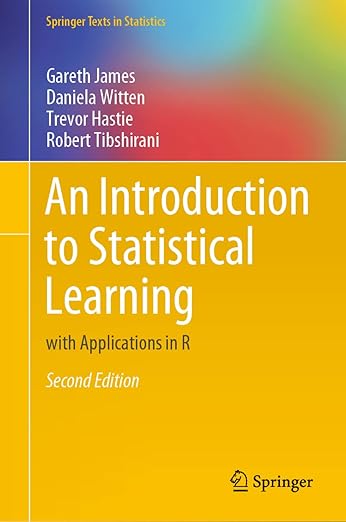
Free PDF. That’s not the reason to read it.
The reason is that most people learning data science skip the statistical underpinning entirely. They learn how to call a function before they understand what the function is doing. ISL fixes that, without requiring a graduate degree in mathematics.
What it actually teaches you: how to think about model selection, bias-variance tradeoff, and overfitting, not as vocabulary words but as real constraints you’ll hit when your model behaves strangely on new data.
The R code is dated, and many people skip it. That’s fine. Read it for the concepts. The explanations are careful in a way that most technical writing isn’t.
One thing people miss: Chapter 5 on resampling. Cross-validation. Most tutorials treat it as a technique. ISL treats it as why things work at all. Read that chapter twice.
Best for: People who know basic ML concepts but don’t yet understand the statistical reasoning behind them.
Get this book on Amazon: United States | India
2.Python for Data Analysis: Best Book for Learning Pandas
Wes McKinney (creator of pandas)
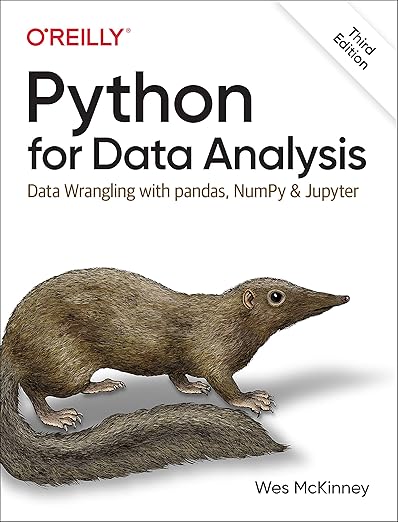
Wes McKinney built pandas. He wrote this book. There’s something useful about reading a tool explained by the person who designed it. You start understanding why it works the way it does, not just what to type.
This is the book that taught me how to think about indexing properly. Not the syntax. The thinking. The difference between .loc and .iloc is trivial. The difference in how you reason about row labels versus positions matters when your data is messy, which it always is.
Get the third edition. And don’t read it front to back. Read the first third carefully, then use the rest as a reference. Know what’s in it so you know what to look up.
Best for: Learners who know Python basics but struggle when working with messy, real-world datasets.
Get this book on Amazon: United States | India
3. Hands-On Machine Learning with Scikit-Learn, Keras & TensorFlow: Best Practical Machine Learning Book
Aurélien Géron (former Google ML engineer)
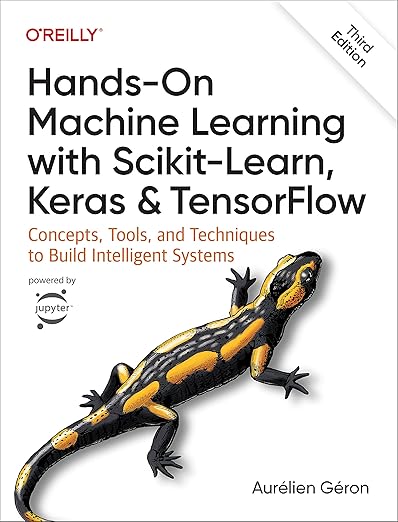
This one is on every list. I’m including it anyway because the reason it’s there matters.
It’s not the best book on any individual topic. It’s the best book that covers the whole pipeline data prep, training, evaluation, deployment basics, and deep learning without losing you.
Read the first half before you touch the deep learning section. Neural networks make more sense after you’ve understood gradient descent in a simpler context. The end-to-end housing price project in Chapter 2 is worth more than three Udemy courses. Do it by hand. Don’t just read it.
Best for: Someone past the beginner stage who wants one book that connects data prep, modelling, and deployment without switching resources constantly.
Get this book on Amazon: United States | India
4.Practical Statistics for Data Scientists: Best Applied Statistics Book
Bruce, Bruce & Gedeck (Peter Bruce co-founded Statistics.com)
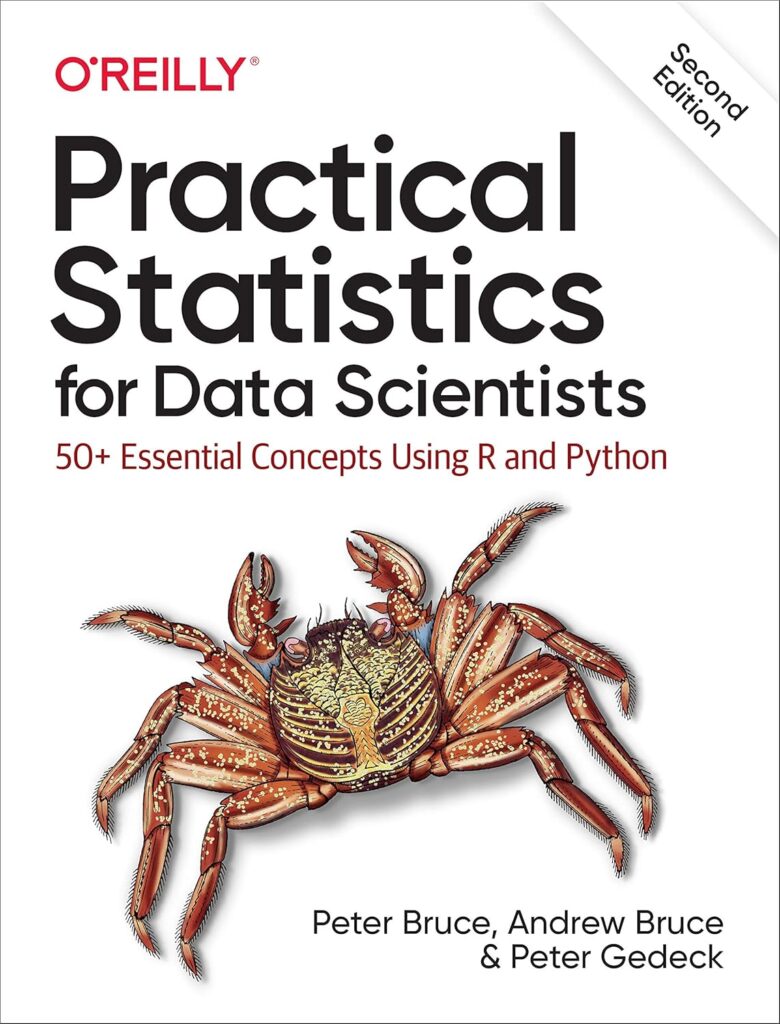
This is the one that doesn’t get mentioned enough.
ISL is rigorous. This one is practical. It’s written for people who come from a programming background and find statistics textbooks hostile.
The chapter on statistical experiments and significance testing is particularly good. It doesn’t just explain p-values, it explains why p-values are misunderstood, how to think about statistical power, and when these tests actually tell you something useful versus when they’re being applied mechanically.
If you’ve ever nodded along in a meeting where someone showed a graph with “statistically significant improvement,” this book closes that discomfort properly.
Best for: Career switchers from non-math backgrounds who find statistics textbooks intimidating but know they can’t keep avoiding the subject.
Get this book on Amazon: United States | India
5. Designing Data-Intensive Applications: Best Book for Data Systems
Martin Kleppmann (distributed systems researcher, Cambridge University)
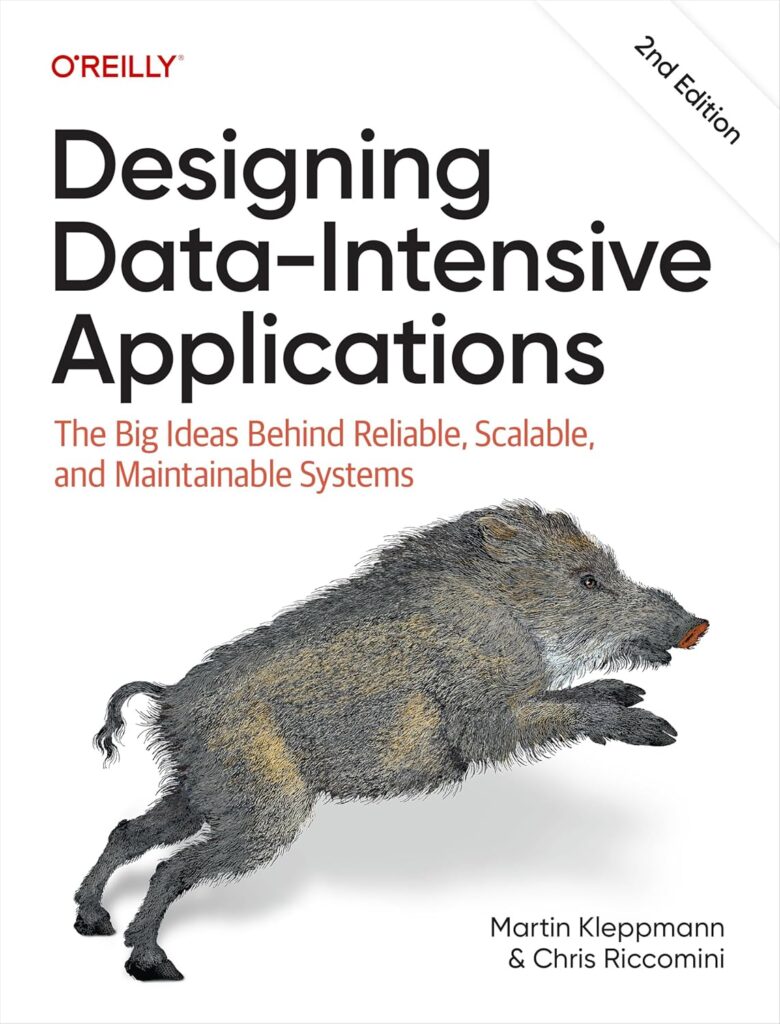
Most data science learning paths ignore this book entirely. That’s a mistake.
It’s not a machine learning book. It’s a systems book. Databases, distributed systems, data pipelines, and the infrastructure that data actually lives in. If you’re moving into data science from a non-engineering background, this is the gap that will keep you dependent on other people indefinitely.
You don’t need to read it like an engineer. Read it like someone who needs to talk to engineers. To understand what’s hard about moving data around, why consistency problems happen, and why your batch job failed at 3 AM.
The first three chapters alone will change how you think about data storage.
Best for: Anyone coming from a non-engineering background who wants to stop being the person in the room who doesn’t understand why the data pipeline broke.
Get this book on Amazon: United States | India
6. Machine Learning Engineering Best Book for Production ML
Andriy Burkov (ML lead at Gartner, author of the widely shared Hundred-Page Machine Learning Book)
Here’s what nobody tells you about data science interviews: they care about models, but they also care about whether you can think about deploying models. What happens after training? How do you monitor a live model? What model drift is. How do you version data?
Most self-taught data scientists have a blind spot here. This book is specifically about that gap.
It’s not glamorous. It doesn’t have exciting algorithms. It’s about the operational reality of ML, the things that separate a Jupyter notebook from a thing that works in production.
You don’t need to master this material early. But you need to know it exists before you’re asked about it in a room.
Best for: Self-taught data scientists preparing for interviews or their first industry role, who’ve never had to think about what happens after a model is trained.
Get this book on Amazon: United States |India
7. Storytelling with Data: Best Book for Data Visualization
Cole Nussbaumer Knaflic (former data analyst at Google)
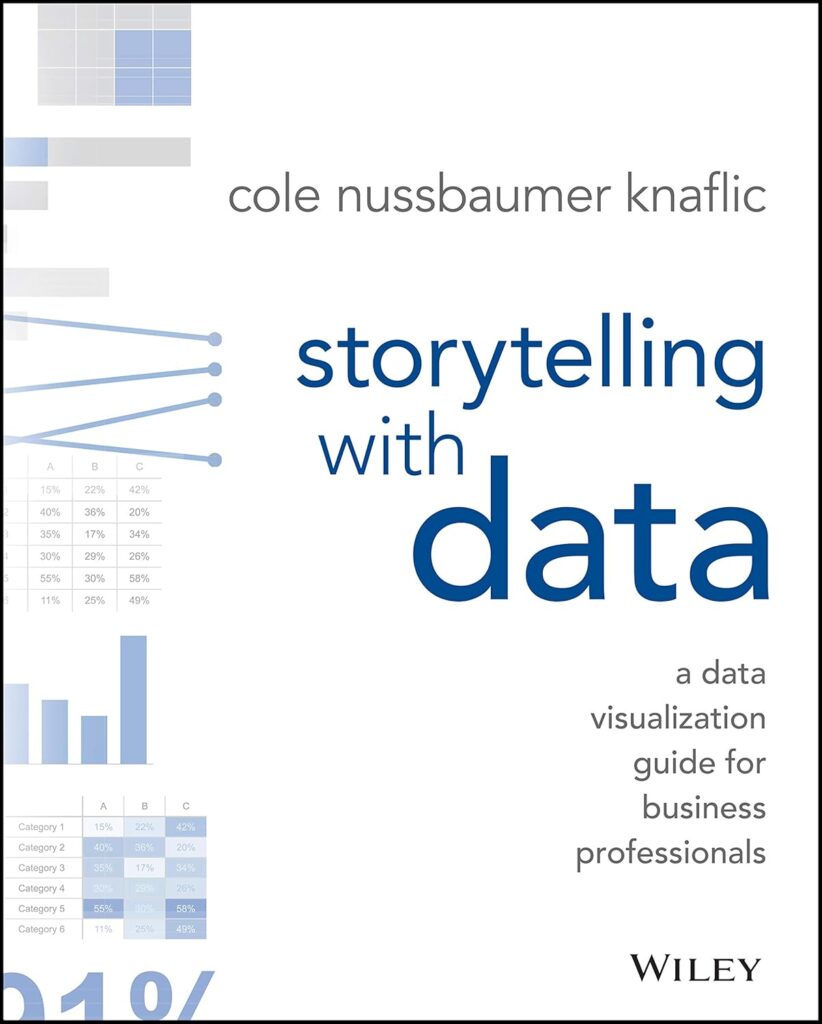
The most underrated book on this list.
The ability to explain what you found often matters as much as the analysis itself. You can build a solid model and explain it badly, and nothing happens. This happens constantly. In every industry. Including tech.
This book is about data visualization, but it’s really about removing noise from your thinking and from how you present analysis. The “declutter” chapter is the most practically useful thing I’ve read about how to present numbers. Read it, then look at every chart you’ve made this month. You’ll immediately see five things to remove from each one.
Best for: Anyone who has ever built something solid and then watched it get ignored because they couldn’t explain it clearly.
Get this book on Amazon: United States | India
On sequence, since that’s what actually matters
Start with ISL and Practical Statistics running in parallel; one gives you the framework, the other gives you the intuition. Read Python for Data Analysis when you’re actively working with data and hitting friction, not before. Hands-On ML is good mid-journey, after you have some grounding.
Storytelling with Data can go anywhere. I’d read it early. Designing Data-Intensive Applications belongs around the time you’re starting to interview. Machine Learning Engineering is last, and that’s correct.
The books that don’t fit your current stage will feel inert. That’s information too. Put them down and come back.
That Tuesday night eventually passed. The Kaggle notebook got opened again. The Coursera tab was closed for good. The Reddit thread kept scrolling.
But the difference was that the confusion had direction.
Instead of randomly jumping between tutorials, there was a map. Statistics first. Then the tools. Then models. Then systems. Then communication.
Progress in data science rarely looks dramatic. Most of it happens quietly, a concept finally clicking, a dataset behaving the way you expected, a model failing for a reason you actually understand.
If you’re in that strange middle stage, not a beginner anymore, but not confident yet, books like these don’t just teach techniques. They change how you think about problems.
And once that shift happens, more of the field starts making sense, piece by piece.
If you’re serious about switching into data science, pick one statistics book and one tools book from this list and spend the next 30 days working through them slowly. Not skimming. Not taking notes, you’ll never read. Actually working through them. That’s enough to start.
Read This Next📌
Top 7 AI Books to Read in 2026 That Truly Shape How You Think, Build & Decide

Amazing Books