
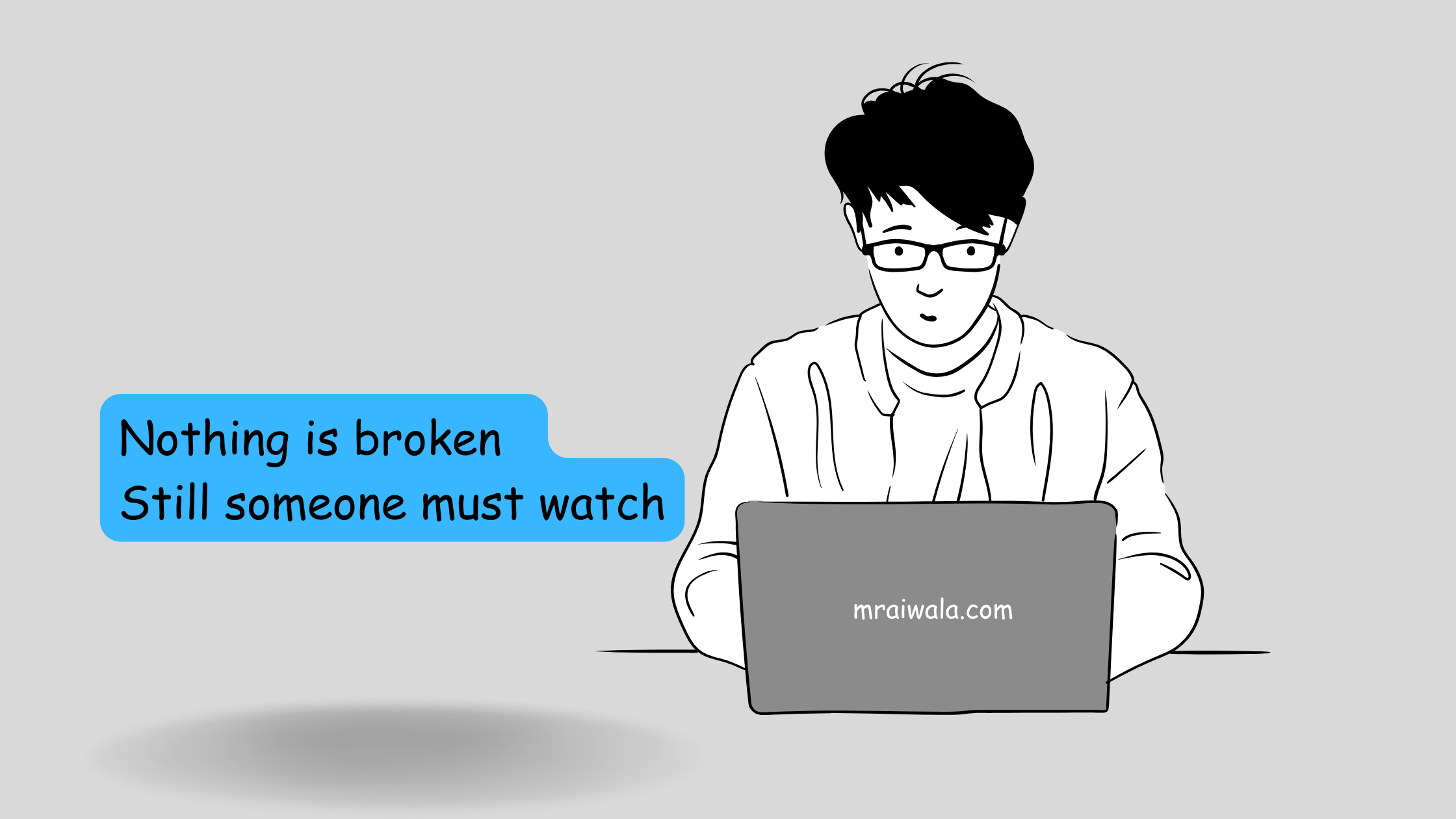

The first thing that breaks isn’t the system.
It’s you.
You’re still awake at 11:43 p.m., refreshing a dashboard you’ve already checked four times. Leads came in earlier. The website didn’t crash. Payments cleared. Nothing is wrong in the way alarms define wrong. And still, you’re watching.
Because somewhere underneath the numbers, there’s a quiet fear that everything only works because you’re there. That if you stop paying attention even briefly, something will slip. Something small. Something expensive. The cost never shows up as a single mistake; it shows up slowly, as attention you never get back.
You tell yourself this is normal. That this is just how business feels in the “growth phase.” Once this next project finishes, things will calm down. They don’t.
Because the problem was never the website, never the ads, and not even the lack of time. The real issue is the way the business has been set up dependent on constant attention in a world that punishes pauses.
Most businesses don’t need better tools as much as they need fewer things that quietly break when no one is looking. And this is where most people misunderstand monthly retainers.
They assume retainers are about tasks, deliverables, or recurring invoices. That explanation never fully satisfies, because it doesn’t explain why businesses keep paying even when nothing dramatic seems to be happening. If you’ve ever wondered what businesses are actually paying for when they agree to a monthly retainer, and why walking away later feels riskier than signing up in the first place, this piece exists for that question.
Where the decision actually starts
Most explanations of monthly retainers begin in the wrong place. They define the term, list benefits, and compare packages. But the real decision doesn’t start in a spreadsheet.
It starts with exhaustion that isn’t dramatic enough to justify a big change, yet persistent enough to be expensive. A founder notices that every time one thing is fixed, something else quietly drifts out of alignment.
The website works until a plugin update breaks a form. Leads come in until follow-ups slow down. SEO traffic grows until competitors publish twice as fast. Sales calls perform until the CRM isn’t updated properly and half the pipeline goes cold. None of these trigger alarms. That’s what makes them dangerous.
One-time work feels logical when you’re solving a visible problem. Monthly retainers enter the picture when invisible costs become louder than the invoice itself.
A form staying broken for two days might not raise panic, but if the site normally gets 10–12 Enquiries daily, that’s 20–25 leads that never reach the CRM. No error notification, no complaint, no clear failure point. By the end of the month, that silence quietly converts into lost revenue, without a single moment anyone can point to and say, “This is where it went wrong.”
What a monthly retainer actually is
A monthly retainer is a fixed payment for a responsibility that doesn’t end when the initial work is done. It’s not a project and not a one-off task.
Businesses aren’t buying hours. They’re buying someone staying aligned with the same problems every month. More importantly, they’re buying the ability to stop personally carrying a category of ongoing operational attention.
That distinction matters because founders don’t burn out from work alone. They burn out from constant context switching. From repeatedly asking whether something is still working, who owns it now, whether anyone checked it, and what happens if they don’t.
A retainer exists to quietly reduce that mental load.
What daily reality really looks like
A common misunderstanding is that retainers mean daily visible activity. In reality, most days nothing dramatic happens.
What happens instead is subtle. Someone notices form submissions feel slightly lower than usual. Someone sees ad costs creeping up and adjusts before performance drops. Someone updates a plugin at noon instead of letting it auto-update at midnight. Someone fixes a tracking issue before reports begin lying.
None of this shows up neatly as a deliverable. Yet skipping these small interventions for weeks allows damage to stack silently.
Businesses aren’t paying for constant activity. They’re paying for early attention instead of late panic.
Completion versus continuity
This is where most one-time work quietly fails.
A website gets built and launched. Everything looks fine. A few months later, load speed drops, traffic becomes uneven, and no one remembers which plugin controls checkout. The developer is technically done, but the business is quietly exposed.
The same happens with ads. A campaign performs well at launch, leads flow in, and then performance dips slightly. Creatives aren’t refreshed, costs creep up, and eventually the campaign is declared “dead,” even though nothing actually broke.
From the business side, this doesn’t feel like failure. It feels like absence. Not betrayal just no one consistently watching the system.
One-time work is designed around completion. Retainers exist because systems never stop moving.
Responsibility is the product
Markets shift, algorithms change, tools update, staff leaves, competitors copy, and customers behave differently every quarter. The business doesn’t want to keep rehiring someone every time reality nudges the system off balance.
So they pay to keep someone responsible.
Responsibility here doesn’t mean eliminating risk. It means noticing degradation early, owning follow-through, and maintaining continuity over time. That word rarely appears on sales pages because it’s heavier than “support” or “maintenance,” but it’s exactly what’s being purchased.
Founders don’t break systems. Operators don’t either. Systems fail when attention disappears. Retainers exist to make sure attention doesn’t quietly vanish.
How monthly retainers actually get approved
The first month of a retainer often feels strangely quiet. There are no fires, no dramatic fixes, and no visible hero moments. That silence can feel uncomfortable, especially for teams used to chaos as proof of importance.
The system hasn’t improved yet. It has simply stopped bleeding. And stability, at first, doesn’t feel like progress.
Retainers aren’t approved to save money. They’re approved to reduce decision load. Every breakdown creates questions who handles this, how urgent is it, what will it cost, and will someone respond. That thinking itself becomes a hidden tax.
There’s usually an unglamorous moment when the retainer gets approved. Not in a meeting room, but late at night, over tea. Someone says, “At least this will stay under control.” Someone else hesitates about adding another fixed expense. Then comes the realization that the cost already exists, it’s just scattered, unpredictable, and invisible. The retainer doesn’t create cost. It contains it.
Monthly retainers as risk management
Before retainers, problems rarely belong to anyone. Marketing blames sales, sales blames lead quality, tech says everything worked when delivered. Issues bounce around until they fade or explode.
A retainer gives problems a clear owner. Not instant solutions, but accountability.
Before a retainer, issues surface late and fixes are reactive. With a retainer, issues surface earlier and corrections become routine. The visible work may look similar from the outside, but the consistency and response speed aren’t. That difference is what businesses are paying for.
Where businesses actually use monthly retainers
Lead generation decays, ads fatigue, audiences saturate, and landing pages underperform quietly. A one-time funnel works on day one, but retainers exist because someone monitors drift before sales feel the drop.
CRMs rot, follow-ups lag, automations misfire, and leads slip through cracks no one remembers creating. Losing $4,000–$7,000 per month because follow-ups weren’t triggered properly hurts far more than any retainer invoice.
Automation isn’t set-and-forget. APIs change, edge cases pile up, and a single missing field can break an entire workflow. Website maintenance isn’t about uptime; it’s about noticing problems before customers do. SEO and content require consistent pressure or momentum resets. In every case, pausing creates loss.
Why some monthly retainers quietly die
Not everything should be sold as a retainer. Logos, brand identities, and redesigns have clear “done” states. Even good retainers don’t always survive.
They rarely end with arguments. More often, they fade out with phrases like, “Things feel stable for now,” or “Let’s revisit this next quarter.” The translation is simple: the risk doesn’t feel sharp enough in the moment. The irony is that the better the preventative work, the harder it becomes to justify. Strong retainers don’t list activity; they point to what never went wrong.
A hard mirror for service providers
If a client can step away from your involvement for a meaningful period and nothing operational, reputational, or revenue-critical is affected, then you’re likely providing a recurring task, not holding an ongoing responsibility. Businesses sense this instinctively, even if they can’t articulate it.
Indian ground reality
Consider a mid-size CA firm. Website, Google reviews, WhatsApp Enquiries, and referral calls. If reviews go unanswered, the site goes down during tax season, or Enquiry replies lag, trust erodes. A $7,000–$12,000 annual retainer here isn’t marketing; it’s reputation maintenance. And reputation loss is never a one-time problem.
The quiet truth
Most businesses don’t articulate it clearly, but they feel it.
They aren’t afraid of work being finished. They’re scared of attention slipping of small things drifting when no one is watching closely enough.
Monthly retainers live in that gap, not as services, but as relief. The dashboard refreshes again. Nothing changes. And that’s exactly the point. Because when no one is responsible for watching the system, silence isn’t calm.
It’s borrowed time. And most of the time, you don’t realize the borrowing has started until something finally breaks.
Related Posts📌
$1k–$10k/Month AI Automation Builder Blueprint
Most AI Tools Create Output. The Winning Businesses Build Systems.
