
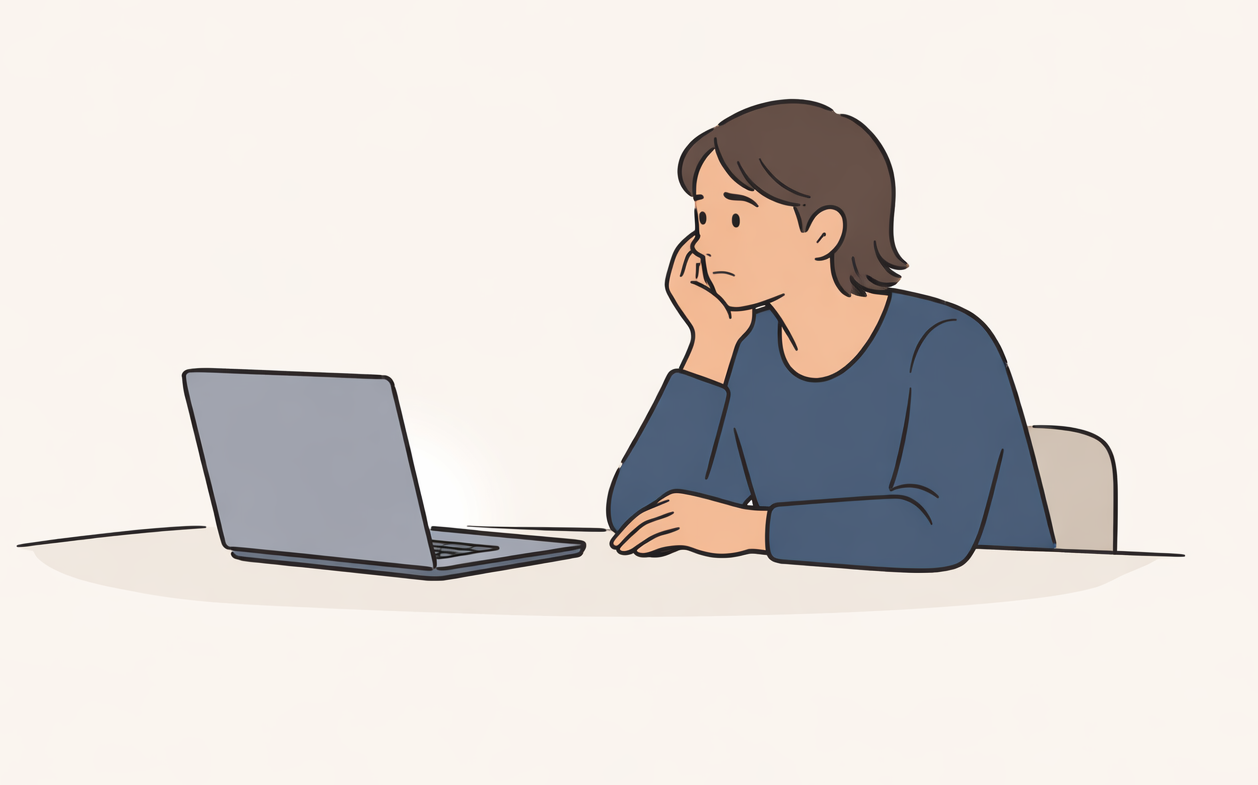
When AI completes the work, but responsibility quietly stays humans.
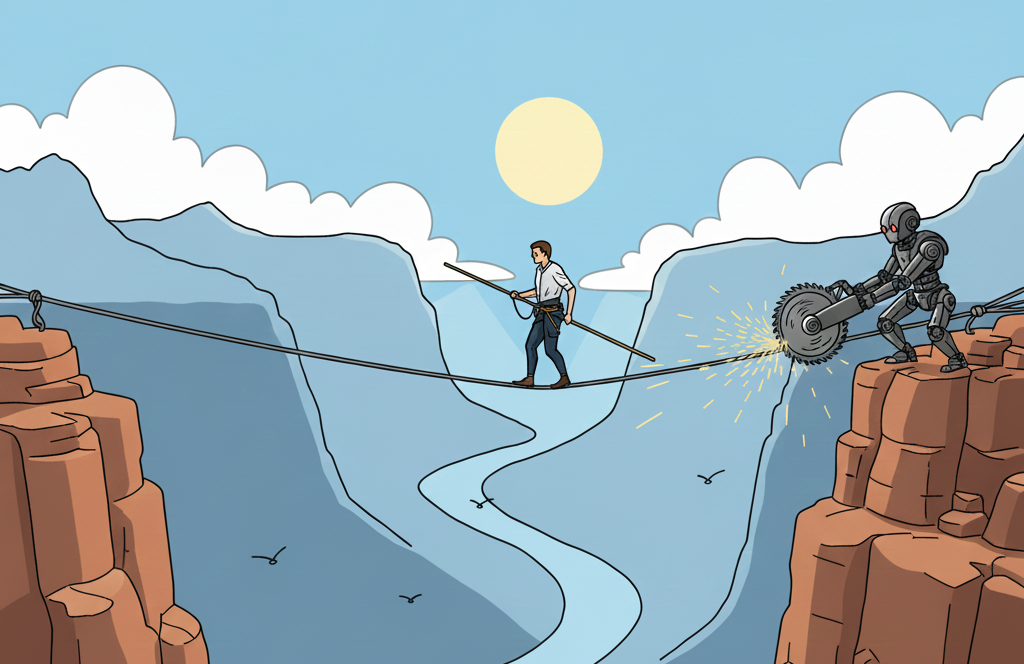
The problem didn’t announce itself. There was no warning. No mistake. No awkward silence after clicking “submit.” The task was simply… done.
I remember noticing it in my body before my head caught up. A small loosening in the chest. The background noise in my mind is dropping a notch. One less thing to think about today. The kind of relief that usually means something is going right. I didn’t celebrate. I didn’t even smile. I just moved on. And that’s what unsettles me now.
Because nothing about that moment felt important. There was no decision, no tension, no sense that something had shifted. Just completion. Clean. Efficient. Reasonable. Only later much later did I realize that something had shifted. Not the work. The responsibility.
Relief is where this actually begins
We keep starting the conversation in the wrong place. We talk about AI responsibility when something breaks when an output is wrong, when a system behaves badly, when there’s backlash, headlines, or damage control. But the real story doesn’t start there.
It starts with relief. The quiet, private relief of a task finishing itself before you felt ready to start it. The small gratitude you feel toward a system that saved you effort. The subtle reclassification in your mind: this is easier now. Relief feels earned. It feels harmless. It feels like progress. And that’s why it slips past scrutiny.
When something fails loudly, responsibility is obvious. But when something succeeds quietly, responsibility becomes slippery. The work is gone, the outcome remains, and someone still owns it. That someone is usually you.
The moment nobody marks but everything changes
There is a specific moment where responsibility transfers, and it’s rarely acknowledged. It’s not when the system generates output, not when the model predicts the next word, and not even when the task finishes. It’s when you allow it to leave your hands.
Approval. Sending. Publishing. Deploying. Acting.
That moment is so ordinary we barely register it. A quick skim. A mental nod. “Looks fine.” Click. And just like that, responsibility settles not dramatically, not ceremonially but permanently.
This is the part we avoid naming plainly: responsibility transfers at approval, not at creation. You don’t need to author something to own it. You just need to be the last human who could have stopped it.
We were taught the wrong mental model
For most of our lives, responsibility followed effort. You struggled through the work and owned the outcome. You delegated and responsibility diluted. You automated and responsibility reduced. AI breaks that equation completely.
Effort collapses, but ownership doesn’t. In fact, ownership often concentrates. Your role isn’t to produce anymore it’s to decide. Is this acceptable? Is this accurate enough? Is this aligned with what I actually mean? Am I willing to explain this if it’s questioned?
These aren’t technical tasks. They don’t feel like work in the traditional sense. They don’t even give the satisfaction of creation. They just sit there quiet and heavy.
A small failure I didn’t want to admit
There’s an output I approved that still bothers me. Nothing catastrophic happened. No client exploded. No trust collapsed, which is probably why I didn’t talk about it at the time. It was a written recommendation confident, well-structured, clean in its logic.
I skimmed it. That’s the part that matters.
I skimmed not because I was careless, but because it sounded reasonable. Because nothing triggered alarm bells. Because I trusted the tone more than I should have. Later, someone asked a question I couldn’t answer cleanly.
Not because the output was wrong, but because it implied certainty I didn’t actually have. I recognized the sentence immediately. I remembered reading it. I remembered thinking, Yeah, that’s okay.
I hadn’t written it, but I had allowed it. And suddenly the explanation was mine to give. That’s when I felt it not guilt exactly, but exposure. The realization that I’d confused plausible with owned.
The uncomfortable middle we all live in now
Most advice pushes us toward extremes. Either “Don’t trust AI. Verify everything.” Or “Trust it. It’s more accurate than you.” Neither describes real life.
What actually happens is messier. You trust enough to move quickly. You review enough to feel responsible. But not enough to fully internalize the consequences. This middle zone is where most modern work now lives.
The system isn’t autonomous. You’re not fully in control. But the outcome still carries your name. That’s why so many people feel vaguely uneasy without knowing why. Nothing is obviously wrong, yet something feels unresolved. Responsibility hasn’t disappeared it has relocated, from effort to judgment.
“Isn’t this unfair?” (The objection we avoid)
At some point, an honest question surfaces: Why should I own something I didn’t fully author? It’s a fair objection. You didn’t design the system. You didn’t train the model. You didn’t choose this shift. And yet you’re the one explaining outcomes, absorbing consequences, carrying relational cost.
That resentment matters. Not because it absolves you, but because it reveals the psychological load we rarely name. Owning responsibility without authorship creates a specific fatigue not burnout, not overload, but something quieter. A constant low-grade vigilance. Always approving. Always validating. Always standing behind outputs you didn’t shape from scratch.
And when something goes wrong, ownership snaps back instantly, with no room to defer. That whiplash is exhausting.
Where “responsible AI” conversations miss the point
Most frameworks focus on design-time ethics: bias, transparency, governance, controls. All important. But responsibility doesn’t finally land there.
It lands at use. In the everyday moment when a human decides to let an output act in the world. No policy can absorb that moment for you. No checklist can replace judgment. No system can own consequences on your behalf.
At some point, someone still says yes or fails to say no. That’s owned responsibility, not as a principle, but as a lived condition.
The quiet shift in what my job actually is
I’ve noticed my work changing in ways I don’t know how to describe on a resume. I spend less time creating and more time deciding whether creation is acceptable. Less time writing and more time pausing.
Pausing is strangely difficult. Everything around us rewards speed, completion, throughput. Pausing feels inefficient, suspicious, almost irresponsible. But in an AI-shaped workflow, pausing is the work. The pause is where responsibility shows up.
One small behavior I didn’t expect to matter
I’ve started doing something simple. When an output arrives fully formed especially when it looks good I wait ten seconds before touching it. Not to edit. Not to optimize. Just to ask myself one question: If this creates a problem later, am I comfortable explaining why I let it pass?
Sometimes the answer is yes. Sometimes it isn’t. That pause doesn’t guarantee correctness or prevent mistakes, but it changes the relationship. It turns approval from reflex into choice. And choice is where ownership becomes real.
The deeper discomfort we don’t like naming
What I think we’re actually struggling with is this: AI didn’t just change how work gets done. It changed where meaning and responsibility sit. We used to locate ownership in effort. Now it lives in judgment.
Judgment is lonely. You can’t automate it. You can’t delegate it cleanly. You can’t point to a process and say, “I followed the steps.” You either stood behind the outcome or you didn’t.
There’s no interface for that. No metric. No dashboard. Just you, and the quiet knowledge that you let something into the world.
Ending, unfinished on purpose
I still feel the relief when tasks finish themselves. I still trust too quickly some days. I still skim when I shouldn’t. Owned responsibility isn’t a lesson you learn once; it’s a tension you return to, usually after you’ve already crossed the line.
Lately, I’m trying not to resolve that discomfort too quickly. If this pause feels familiar to you that moment where something is done but doesn’t feel settled you’re probably already carrying more responsibility than you realize.
I don’t think the answer is to retreat from these systems, or to pretend we can control them completely. I think it starts with noticing where responsibility actually lands now often later than we expect, quieter than we want, and usually right after the moment we felt relieved.
I’m still learning to sit with that.
I suspect you might be too.


1 thought on “AI Finished the Task, But the Responsibility Was Still Mine”