
I’ll be honest… I didn’t plan to write about AI engineering today.
It was one of those slow, slightly overcast mornings where you keep staring at the blinking cursor and wonder if the world really needs another tech article. And then almost instinctively, I found myself remembering a short conversation I had with a young college student a few months ago.
He looked nervous, hopeful, and a bit overwhelmed.
“Sir… should I become an AI engineer or am I walking into a trap?”
That question stuck with me longer than I expected.
Because behind that one line, there’s a whole universe of doubt and excitement that so many people are quietly carrying in 2026.
You might be feeling it too.
If you’re reading this, I’m guessing a small part of you is wondering:
Is this AI wave really worth riding… or am I too late… or maybe it’s all hype?
Trust me, I’ve had the same thoughts.
AI is magical and messy, predictable and unpredictable, brilliant and flawed all at once.
So, let me think through this with you… slowly, honestly, like two humans trying to figure out a chaotic future together.
The Strange Appeal of Becoming an AI Engineer in 2026
There’s something almost intoxicating about the idea of being an AI engineer today.
Not because of the salaries (though, let’s be real… those numbers do look tempting).
It’s more because AI engineers feel like architects of the future, the people defining how work, creativity, communication, and maybe even intelligence itself evolves.
But, and this is important, the AI engineer of 2026 doesn’t look like the AI engineer of 2020.
Let me explain this in the simplest, most human way I can.
AI Engineering Has Quietly Split Into Two Worlds
Most people don’t realize this yet.
There’s the old idea of an AI engineer:
train models, tweak hyperparameters, work in Python, deploy something… done.
But 2026 has birthed a new species of AI engineer I like to call them:
The AI Systems Architect.
Not just a coder.
Not just a model trainer.
But someone who understands how entire AI-driven systems behave, communicate, self-improve, and scale in the real world.
Honestly, the shift happened faster than any of us expected.
We blinked… and suddenly:
- Chatbots turned into agents
- RAG pipelines turned into knowledge ecosystems
- Fine-tuning turned into data orchestration
- “AI app” became AI workflow
If you ask me, this is the biggest reason the AI Engineer role is still so powerful because it’s evolving, not disappearing.
Let’s go deeper.
From Chatbot to Autonomous Agent The New Phase of AI Engineering
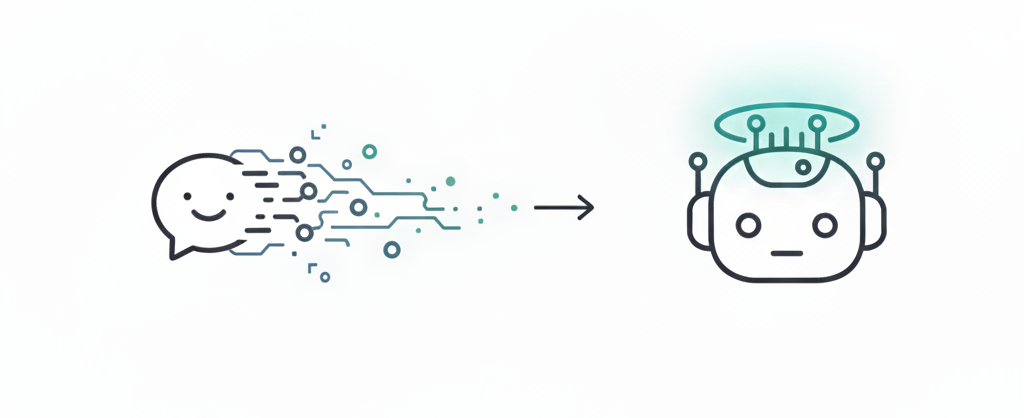
Imagine you’re building a chatbot in 2020.
It’s simple. Predictable. Annoying, sometimes. Like training a teenager to answer customer queries.
But in 2026?
You’re not building a “bot.”
You’re building an AI employee.
One that:
- Plans tasks
- Searches the web
- Writes, rewrites, checks, corrects
- Calls APIs
- Makes decisions
- Coordinates with other agents
- Learns from user behavior
- Generates insights on the fly
Honestly, the first time I saw an agent autonomously build an entire research document with citations, revisions, and task planning something inside me quietly whispered:
“…wow. This is not software anymore. This is a system.”
AI Engineers now design workflows, not just code.
The days of “train model → build UI → deploy” are fading.
In this new world, AI Engineers:
- Map human goals to AI tasks
- Architect multi-agent planning
- Design memory systems
- Manage context windows
- Prevent runaway hallucinations
- Ensure traceability
- Optimize cost-per-output
- Integrate 5+ AI services cleanly
It’s… a lot.
Sometimes too much.
But it’s also the reason why AI Engineers are becoming invaluable.
Because while tools evolve fast, human judgment the ability to design meaningful, safe, powerful AI systems isn’t going anywhere.
The Data Differentiator Why RAG Beats Model Training (Most of the Time)
Let me confess something.
There was a time I believed that “real AI engineers” must train massive models.
Like if you weren’t fine-tuning a 70B model on a cluster of GPUs that sounded like a jet engine, you weren’t legitimate.
But honestly… that’s just ego talking.
In real production environments of 2026, companies have quietly accepted a truth:
RAG (Retrieval-Augmented Generation) is the real superpower.
Why?
Because AI systems don’t need to “know everything.”
They just need to remember the right thing at the right time.
Training is expensive, slow, and hit-or-miss.
RAG is flexible, explainable, and insanely powerful when done right.
But here’s the twist…
RAG in 2026 is not “let’s just stuff data into a vector database.”
It’s a whole ecosystem:
- Metadata routing
- Hierarchical chunking
- Multi-vector indexing
- Semantic compression
- Hybrid search
- Domain-specific embeddings
- Temporal updates
- Fact-check pipelines
You know what’s funny?
Most companies don’t actually want “AI engineers” anymore… they want:
Data Aware AI Engineers.
People who understand:
- Document structure
- Domain semantics
- Retrieval logic
- Knowledge modeling
- Data freshness
- Pipeline orchestration
It’s not glamorous work trust me but it’s the kind of work that separates average AI engineers from truly indispensable ones.
And this is exactly why becoming an AI Engineer today can be incredibly smart…
if you’re willing to understand data deeply.
MLOps: Scaling AI from Laptop to Production (The Hard Part Nobody Talks About)
Okay, real talk.
The most painful part of AI engineering is not building the model.
It’s not designing the prompt.
It’s not orchestrating the agents.
It’s deploying the damn thing.
You push something from your local machine into production, and suddenly everything breaks.
Latency skyrockets.
Costs explode.
Logs fill up like an overflowing trash bin.
And your monitoring dashboard keeps throwing errors you swear you’ve never seen before.
This is where MLOps becomes the backbone of your sanity.
But strangely, most aspiring AI engineers underestimate this area completely.
AI without MLOps knowledge is like a car without wheels.
Here are the skills that matter in 2026:
- Containerization
- GPU/TPU scheduling
- LLM caching
- Autoscaling
- Observability
- Token usage optimization
- Data drift monitoring
- Canary deployments
- Real-time evaluation
These aren’t “nice to have.”
They are mandatory.
Because when your AI system suddenly gets 10,000 users, you don’t want your server crying in a corner.
If you want job security as an AI engineer, learn MLOps.
Not the fancy version.
The gritty, real-world, bug-filled version.
Responsible AI: The Skill Nobody Wants to Learn but Everybody Will Need
Let me pause for a moment…
Because this part is deeply personal to me.
A few years ago, I watched a company face a PR nightmare because their AI system unintentionally discriminated against a particular group. It wasn’t malicious. It wasn’t intentional. But the harm was real.
I remember thinking:
“We’re building systems that can affect millions… and we barely talk about ethics.”
In 2026, things are finally changing.
Regulators are strict.
Companies are scared.
And users are more aware than ever.
This means:
A successful AI engineer must understand:
- Bias detection
- Prompt-level safety
- Dataset filtering
- Governance frameworks
- Transparency reporting
- Explainability
- Audit trails
- Fairness evaluation
- Privacy-preserving techniques
These may sound boring.
But trust me… the moment one of your AI outputs goes viral for the wrong reason, you will wish you learned all this earlier.
This is why Responsible AI isn’t just a technical requirement it’s an emotional one.
It forces you to ask:
“Am I building something that helps or harms?”
And that question alone makes AI engineering a very human job.
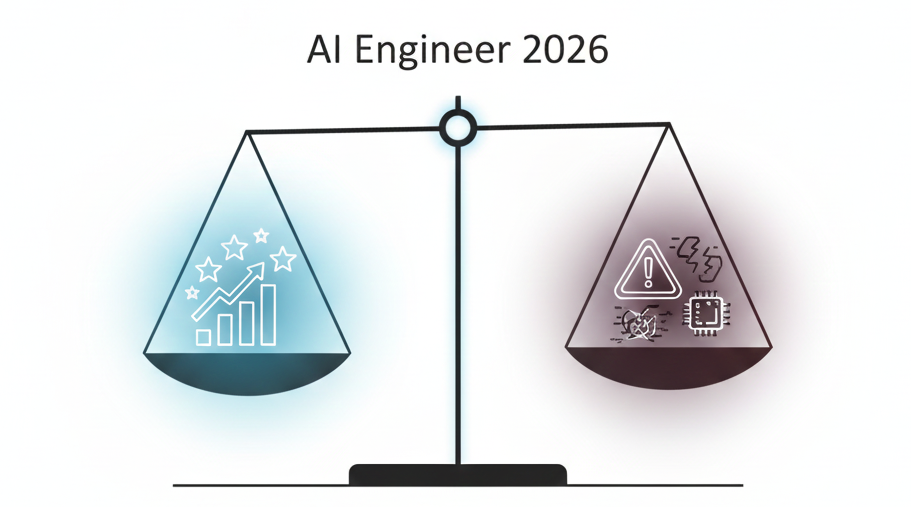
So… Is Becoming an AI Engineer in 2026 a Smart Career Move or a Mistake?
Let me try to answer this honestly not as a tech writer, but as a human who has spent years inside this field.
When It’s a Smart Career Move
If you love:
- Problem-solving
- System thinking
- Data
- Designing workflows
- Understanding humans
- Managing complexity
…then AI engineering will feel like home.
It’s intellectually fulfilling.
Financially rewarding.
Emotionally stimulating.
And still full of opportunities.
When It Could Be a Big Mistake
If you think:
- “AI tools will do all the work for me”
- “I only need to prompt models”
- “I don’t need to understand systems”
- “I can memorize everything”
- “This field is stable and predictable”
…then honestly, this path will frustrate you.
AI engineering in 2026 is beautiful but chaotic.
Rewarding but demanding.
Exciting but exhausting.
It requires continuous learning sometimes weekly.
It requires humility because models surprise us every day.
And it requires patience because debugging AI feels like arguing with a toddler who insists it’s right.
But if you’re willing to embrace both the magic and the madness…
Then yes.
Becoming an AI engineer in 2026 is absolutely worth it.
A Quick Human Story Before We End
A few weeks ago, I watched a beginner AI engineer lead a team meeting for the first time.
He wasn’t the smartest person in the room.
He wasn’t the fastest coder.
He wasn’t even the most experienced.
But he had something rare:
He understood systems.
He understood people.
He understood where the future was quietly heading.
At one point he said:
“AI isn’t replacing us. It’s asking us to grow.”
For some reason, that line hit me harder than I expected.
Maybe because it’s true.
My Final Thoughts (Not a Conclusion, Just a Feeling)
If you’re thinking of becoming an AI engineer, I want you to know something:
It’s okay to be scared.
It’s okay to feel late.
It’s okay to wonder if you’re good enough.
Everyone does.
Even the experienced ones.
But the future is not built by people who feel ready…
It’s built by people who decide to start anyway.
And if something inside you quietly whispers:
“I want to be part of this…”
then trust that whisper.
Because some careers give you a salary.
But a few very few give you a sense of purpose.
AI engineering, in 2026, still has that spark.
If you ask me…
Go for it.
But go in with open eyes, steady expectations, and a willingness to grow into someone you’re proud of.
Releted Posts 📌
AI Agents Are Evolving at a Speed Beyond Human Control.
Forget Prompt Engineering and Learn This Skill Instead
Follow me on Medium: Sudarshan Gore


4 thoughts on “Is Becoming an AI Engineer in 2026 a Smart Career Move or a Big Mistake?”