
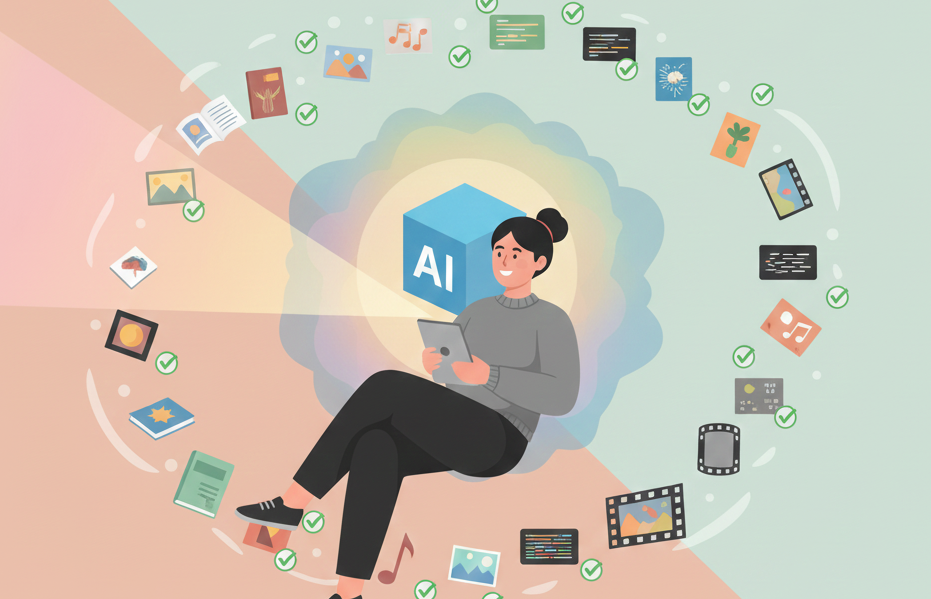
I didn’t start thinking about AI automation because I wanted to grow faster.
I started because I noticed something uncomfortable:
most of my creative time was being spent on work that didn’t need me.
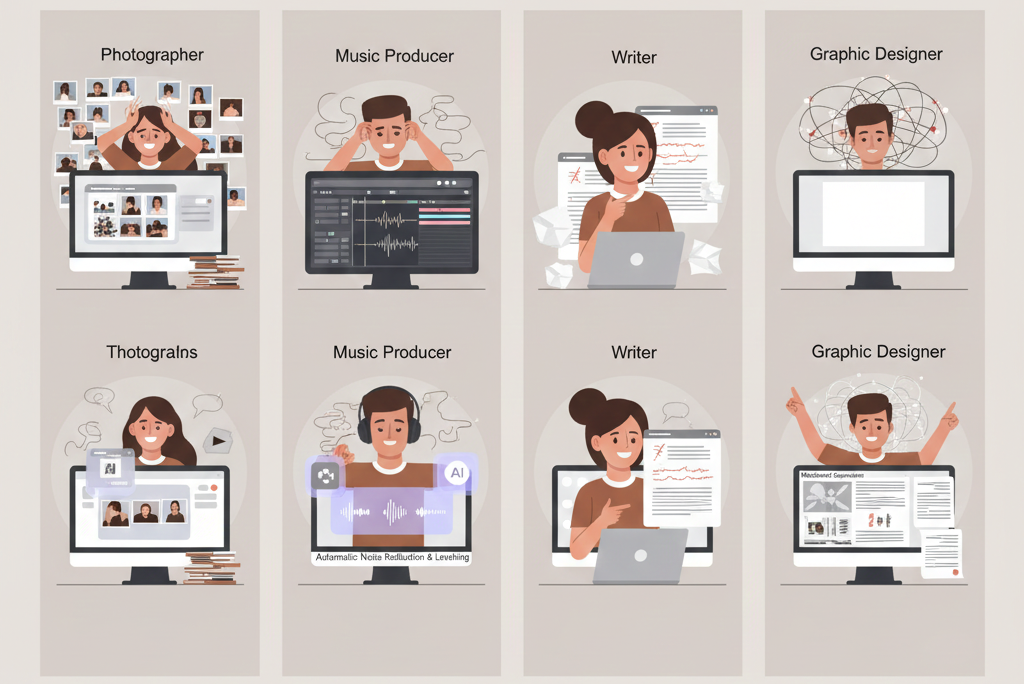
Nothing was technically wrong.
Deadlines were met. Systems were running. Content was going out.
And still, everything felt heavy.
Not because the work was hard
but because it was hollowing out my attention.
AI automation for creators usually gets framed as a growth tactic.
More output. More speed. More reach.
But that story never explained the quiet fatigue I was carrying the kind that builds when your best energy gets drained by renaming files, reformatting the same idea for different platforms, and making the same small decisions again and again.
Over time, that repetition blurred something important.
I couldn’t tell whether I was tired because the work demanded effort
or because it no longer felt like work that mattered.
And that distinction matters far more than most advice about productivity, discipline, or “working harder” ever admits.
The Lie We’re Taught About AI Automation
There’s a version of the AI automation conversation that always feels a bit aggressive to me.
Automate everything.
Scale endlessly.
Become a machine that outputs content.
I flinch at that version.
Not because it’s immoral. Because it’s inaccurate.
It assumes creators want more. More posts, more reach, more dashboards lighting up with metrics. And sure, sometimes we do. But that’s not the ache underneath most creative burnout.
The deeper ache is quieter.
It’s the feeling of being mentally scattered. Of never fully landing inside your own work. Of constantly switching contexts before a thought gets the chance to settle.
Most articles sell AI automation as a growth hack. A speed multiplier. A way to “10x your output.”
That framing misses the real gift.
Automation doesn’t add power first.
It removes weight.
What Creators Actually Lose Before They Burn Out
Burnout isn’t caused by hard work alone. Anyone who’s ever loved a craft knows this. You can work obsessively for years without collapsing if the effort feels coherent.
What breaks people is friction without meaning.
Context-switching without recovery.
Decisions without closure.
One moment you’re writing something fragile and half-formed.
Next you’re tagging files.
Then replying.
Then formatting.
Then checking analytics.
Then wondering if the thing you made will even be seen.
Your brain never closes a loop.
AI automation, when used well, closes loops quietly in the background. Not with fireworks. With absence.
And absence is underrated.
The Subtractive Power Nobody Advertises
The first real benefit of automation is not time saved.
It’s attention reclaimed.
When predictable, repeatable tasks disappear, your mind stops bracing itself. Stops holding mental Post-it notes. Stops running background anxiety about what you’re forgetting.
At first, that mental relief feels strange. Almost empty.
And emptiness scares creators. We’re trained to fill gaps.
But that empty space is where original thought stretches out again. Slowly. Awkwardly. Like a limb waking up after being numb.
The Hidden Middle Layer Nobody Names
There’s a layer between creativity and AI automation that almost no one talks about.
Not tools.
Not ideas.
Rituals.
Every creator has invisible rituals: how they begin work, how they shift between tasks, how they decide something is “done enough.”
AI Automation doesn’t replace rituals.
It hardens them into defaults.
If your ritual is weak, automation will fossilize it.
If your ritual is strong, AI automation will protect it from erosion.
This is why two creators can use the same AI system and get opposite results. One feels liberated. The other feels hollow.
Same tech.
Different inner scaffolding.
Automation Isn’t About Doing Less Work
This part gets misunderstood constantly.
Good automation doesn’t reduce the amount of work you do. It changes the texture of work.
You stop doing tasks that require compliance and start doing tasks that require judgment.
You stop being a dispatcher and become an editor. A decider. A calibrator.
And yes, that sometimes means facing questions you were avoiding.
If a system posts your content automatically, you can’t pretend posting is the work anymore. If drafts are organized, you can’t hide behind chaos. If reminders and workflows run smoothly, you’re left with the uncomfortable part: choosing what actually deserves to exist.
AI Automation exposes weak intentions.
That’s why some people resist it without realizing why.
The Quiet Fear Nobody Says Out Loud
There’s an anxiety humming under all of this, especially for solo creators.
If AI can automate parts of my process… what does that say about my value?
It’s a fair fear.
But it rests on a misunderstanding of where creative value lives.
Value was never in repetition.
It was never in manually doing the same thing again and again to prove effort.
It lives in taste. In timing. In restraint. In knowing when not to publish.
Automation doesn’t replace that.
It reveals whether you actually have it.
Where Automation Fails (And Why That’s Good)
Let’s be honest.
AI automation is clumsy at nuance. It doesn’t know when silence is better than output. It can’t feel when an idea is emotionally premature.
Those limitations aren’t flaws.
They’re boundaries.
And boundaries protect the human role.
Creators who use automation well don’t hand over judgment. They offload execution. They keep the steering wheel.
Automation Changes Your Relationship With Guilt
This surprised me.
Before automation, guilt came from unfinished tasks.
After automation, guilt comes from unfinished thinking.
When systems handle reminders, scheduling, follow-ups, you can’t say “I didn’t get to it” anymore.
You got to it.
You just didn’t go deep.
That’s a sharper kind of accountability.
Some creators avoid automation because it removes the excuse layer. No mess to hide behind. No chaos to blame.
Just you and the work.
The Energy Curve Nobody Measures
We track views. Clicks. Output.
Almost no one tracks creative energy over time.
Automation flattens the energy curve. Not by making you excited, but by reducing emotional spikes and crashes.
You stop feeling heroic on productive days.
You stop feeling useless on quiet ones.
The work becomes steadier. Less dramatic. More sustainable.
Boring to talk about.
Essential for longevity.
The Unsexy Wins That Change Everything
Nobody brags about these, but they matter.
Not worrying about backups.
Not re-deciding workflows every week.
Not manually tracking what’s published where.
Tiny frictions.
Huge cumulative cost.
Remove enough of them and your nervous system relaxes. You write differently. You think longer. You stop rushing ideas just to clear mental clutter.
Why Automation Makes Some Creators Feel Less “Special”
Here’s an uncomfortable truth.
When repetition disappears, some creators realize they were using busyness as identity.
Automation strips away performative exhaustion.
What’s left is quieter: judgment, consistency, restraint.
Those don’t get applause.
But they compound.
The Long-Term Advantage Nobody Prices In
Creators who automate early develop a different relationship with work.
Less reactive.
Less urgency-addicted.
More patient.
Over years, that patience becomes a competitive advantage.
Not visible in metrics.
Visible in careers that don’t collapse.
Automation as Boundary Enforcement
Automation isn’t just efficiency.
It’s saying no by default.
No to constant availability.
No to re-deciding the same things.
No to other people’s urgency hijacking your focus.
A system that runs without you is a boundary you don’t have to defend emotionally.
Where This Leaves Me
I don’t think automation is magic.
Some days it feels cold. Some days it exposes questions I’d rather postpone.
But when systems handle the noise, my thinking slows down without collapsing. My work feels steadier. Less desperate to prove itself.
That doesn’t make me extraordinary.
It makes me clear.
If you’re wondering whether automation would help you, don’t ask how much time it will save.
Ask this instead:
What part of my creative process deserves more of me
and what part really doesn’t?
That answer will change over time.
That’s okay.
For now, this is where I’m standing.
And it feels steadier than before.
Releted Posts📌
Forget Prompt Engineering and Learn This Skill Instead
Is Becoming an AI Engineer in 2026 a Smart Career Move or a Big Mistake?
Human Moral Judgment: The Most Valuable Skill AI Can’t Replace


3 thoughts on “AI Automation for Content Creators: Save Time and Stay Focused”