

Most AI blog content doesn’t fail because of bad writing.
It fails before the topic is even chosen.
30 articles. 3 weeks. Zero traffic.
Not low. Not “wait and see.” Zero.
I was using AI writing tools. Publishing daily. Doing everything right on paper.
Still nothing moved. No impressions. No clicks. No signal that any of it existed.
Every morning, same routine. Open analytics. Refresh. Nothing.
That’s when it hit. What was I actually doing?
I wasn’t growing. I was just producing.
More content. More output. Same results.
It felt like progress. It wasn’t.
And that’s the trap. It keeps feeling right until the numbers force you to look again.
Most AI advice is wrong.
It tells you to write better. Structure better. Hook better.
But writing was never the bottleneck.
The decision before writing was.
What to write.
And whether it was worth writing at all.
The Real Problem Wasn’t the Tools
I was using writing tools to solve a positioning problem.
Every draft felt complete. Clean structure, decent flow, everything looking ready to publish. But complete-looking content and useful content are two completely different things, and I had spent weeks confusing one for the other.
Writing content isn’t the bottleneck anymore. Competing with what already exists is.
If you’ve been blogging for six months, have 30 articles, and almost no traffic, you’re probably not failing at writing. You’re failing at selection. Here’s what a better selection actually looks like before you open any tool:
- Search your keyword
- Open the top 3 results
- Ask honestly: “Would I bookmark this?”
- If yes → don’t write. You can’t beat it yet.
- If no → find what’s missing and build around that gap
Most AI tools skip this entirely. They help you write the article. They don’t help you decide whether the article should exist.
The Moment Everything Clicked And Why It Was Uncomfortable

One afternoon, I Googled my own topic.
And I wouldn’t have clicked my own article.
Not because the writing was bad. Because the title gave me no reason to. Because every competing page already covered the same ground. Because I had written something the internet didn’t need another version of.
That was the real problem. Not the tools. Not the structure. I pick topics by instinct, publish by habit, and measure success by output instead of outcomes.
One article had 280 impressions and 3 clicks. The page was ranking. People were seeing it. They just weren’t clicking. That’s not a writing problem; that’s rejection. The reader looked at my title and decided something else was worth their time.
No AI writing tool was going to fix that.
What 30 Articles and Zero Traffic Actually Taught Me
Out of 10 tools, eight helped me write faster. Only two contributed to actual traffic movement: Perplexity AI for topic selection, and Google Search Console for optimization decisions.
The tools that worked didn’t improve my writing. They improved my decisions.
AI tools don’t fail. They just help you publish things nobody searches for.
That’s the line nobody says clearly. And once you see it, you can’t unsee it.
How I Tested This (Without Guesswork or Luck)
Ten tools, fourteen days. Same niche, same site, same publishing schedule. Low-competition keywords only, KD under 20. Articles between 1,200 and 1,500 words structured to isolate what the tool contributed, not what timing or luck did.
Result: six tools produced content that was grammatically correct, reasonably structured, and ranked for nothing. Two improved readability. Two actually moved traffic, not because they wrote better, but because they changed what I decided to write.
Two out of ten. And only because I stopped treating them as writing tools.
The Only Workflow That Actually Moved Traffic
- Topic discovery → Perplexity AI
- SERP gap understanding → Thruuu
- Draft creation → KoalaWriter
- Human polishing → Wordtune
- Optimization → NeuronWriter
- Performance tracking → Google Search Console
Everything else is optional.
Before you upgrade your tools, fix your laptop. Most blogging problems start with a slow setup. A faster setup makes everything easier. Check latest price on Amazon: United States | India
Tool-by-Tool Breakdown
1. Perplexity AI Changed How I Pick Topics
I’d been using UberSuggest free tier, Google autocomplete, and the odd Ahrefs free search. Fine tools. But none of them showed me what people were frustrated about right now.
Perplexity did.
It surfaced questions that were still open in the SERPs, new enough that authority sites hadn’t buried them yet. If you’re using ChatGPT or Gemini to brainstorm ideas, stop. They’re trained on past data. Ideas that made sense eighteen months ago. Perplexity pulls from this week.
How I actually use it:
- Type: “Why is [your topic] not working?”
- Read the follow-up questions it surfaces
- Pick 3 that feel specific and frustrated
- Google each one
- If results are thin or old, that’s your article
Idea generation is a real-time problem. Treat it as one.
The limitation: no competition difficulty data. Every idea still needs manual validation before writing.
2. NeuronWriter The One That Actually Moved Rankings
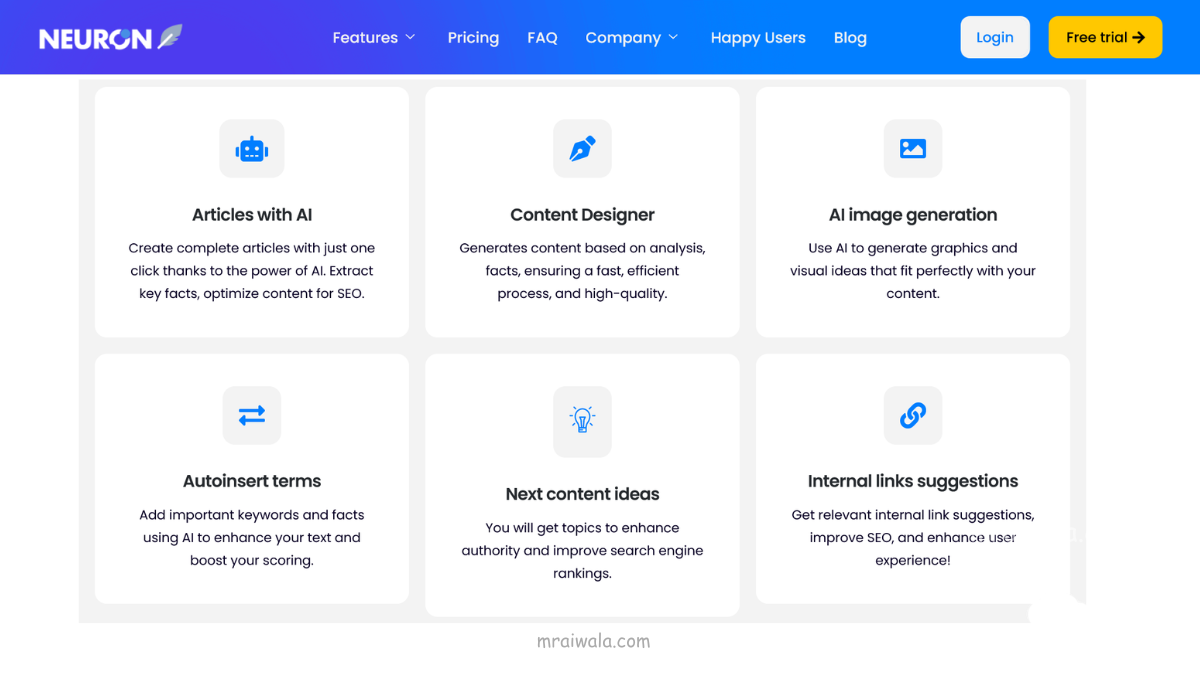
Most SEO tools tell you keyword density and readability scores. NeuronWriter does something different: it tells you what your article is missing compared to the pages already ranking.
First time I used it properly: article sitting at position 14, content score 42, needed to be closer to 70. Added three missing sections. Rewrote the intro. Tightened the title. CTR went from 1.8% to 4.1%. Same article. No new content.
Within two weeks, it was getting consistent daily clicks, something that hadn’t happened in three months since publishing.
Ranking isn’t about writing more. It’s about missing less.
If your article is stuck between positions 10 and 20:
- Check what competitor headings cover that yours don’t
- Add those missing sections to fill real gaps, don’t pad
- Rewrite your intro to match actual search intent
- Rewrite the title for curiosity, not just accuracy
Real learning curve. The first session will be confusing. Push through it, it’s worth it. But it cannot rescue a weak topic.
3. Google Search Console The One Everyone Ignores
Filter by impressions. Find articles with 50–500 impressions and CTR under 2%. Rewrite only the title and first paragraph. Don’t touch anything else.
Two of my articles moved from position 16 to position 9 from this alone. Clicks started coming in for the first time despite impressions sitting there for weeks.
Most bloggers skip this because it doesn’t feel like creation. It’s the highest-leverage thirty minutes you’ll spend this month.
4. KoalaWriter Fast Drafts, Buried Results
Four articles published. Zero impressions on three. One reached position 24 and stayed there.
The content isn’t bad. It’s just the average of everything that already exists. Google isn’t looking for the average. Speed was never the advantage; relevance was.
5. RightBlogger Strong Hooks, Weak Outcomes
Strong hooks. Drafts that felt ready to publish. Same problem as KoalaWriter: good-looking content with nothing new to offer the SERP.
Both tools feed the same belief: publish consistently, and traffic will follow. Sometimes true on high-authority sites or in brand-new verticals. For most bloggers in established niches, publishing faster just gives you more pages sitting quietly at the bottom of Google.
Google doesn’t reward effort. It rewards better answers.
6. Wordtune Better Reading, No Ranking Impact
Improved readability and flow, especially in introductions. No measurable change in rankings or impressions. Made content better to read, not easier to find.
7. Thruuu Useful for Context, Not Direction
Showed how deeply competitors covered a topic. Clarified what was standard across the SERP, but didn’t tell me what angle would actually outperform those pages. Data without interpretation.
8. Harpa AI Fast Competitor Analysis, Shallow Insights
Extracted headings and patterns from top-ranking pages quickly. But it only showed what already existed, not what was missing. Without your own judgment, it adds information but not direction. Only worth using if you’re already comfortable reading SERPs yourself.
9. Originality.ai Answers a Question Nobody Asked
Passing AI-detection checks had no relationship with ranking performance. Not a single article that scored well here ranked better because of it. Detection scores are not a ranking factor.
10. Headline Studio Marginal, Context-Dependent
Titles got more interesting. CTR improved slightly on some, nothing on others. It predicts performance based on historical patterns, not your specific SERP. Your analytics know your reader better than this tool does.
Why Most AI Blog Writing Tools Don’t Drive Traffic
Most help you write faster and sound more human. Very few help you choose the right topic, identify real gaps, or compete with what’s already ranking.
Here’s the part that’s uncomfortable to read: if you have 20+ articles and almost no traffic, the problem probably isn’t your tools or your writing quality. It’s that your topics aren’t worth ranking. Google isn’t punishing you, it’s just indifferent. There are already pages covering what you wrote, and yours didn’t give anyone a reason to choose it instead.
If your site has zero impressions, no clear keyword focus, and no defined niche, the problem isn’t optimization. Its direction. More tools only mean more output going nowhere.
Before You Blame the Tools, Check This
If two or more of these feel accurate, the tool you need isn’t a writing tool:
Picking topics by instinct, not intent. Nobody’s searching for it, or they’ve already found a better answer somewhere else.
Measuring output, not outcomes. Articles per week, words per article, these feel productive. They don’t predict ranking.
Never actually read what’s ranking. Not skimmed. Read. If you haven’t spent twenty minutes on the top three results before writing, you don’t know what you’re competing against.
Optimized the draft, not the gap. If the benchmark is your own previous draft, you’re measuring the wrong distance.
Published and moved on. Position 19, 40 impressions, 1.2% CTR, that’s not a dead article. That’s thirty minutes of real attention most bloggers never give it.
What I’d Do Differently If I Started Today
Just starting: Perplexity for topics, Wordtune to humanize drafts, Search Console once a few articles are live.
Six months in with flat traffic: Add NeuronWriter. Run existing articles through it before writing new ones. What you’ve already published is often more worth fixing than writing something new.
Broken into weeks:
Week 1: Stop publishing. Filter Search Console by impressions. Find articles with 50–500 impressions and CTR under 2%. Pick two. Only two.
Week 2: Fix those two properly. NeuronWriter for gap analysis, Thruuu for competing title patterns. Don’t touch articles with zero impressions, yet that’s a different problem.
Week 3: Find one new topic. Perplexity for real-time questions, manual SERP check before writing. If you wouldn’t read the top results yourself, there’s room. Write one article.
Week 4: Track, then decide. Did the fixed articles move? If yes, repeat. If not, the problem is that the domain authority is slower, and the work is different.
This isn’t a checklist. It’s a decision loop. You’re figuring out whether existing content is worth rescuing or whether you need better foundations.
The Shift That Changed Everything
If optimization isn’t moving your articles, the problem isn’t how you wrote it; it’s that it was never worth writing.
Clarity comes from what you choose, not what you tweak.3
Fix that, and everything else starts working.
FAQ: The Questions That Actually Matter (Before You Use AI Tools)
Do AI blog writing tools actually drive traffic?
Not on their own. Traffic comes when the topic has real search demand, the content is better than competing pages, and the article is properly optimized. Most AI tools only handle the third part. The first two depend entirely on decisions you make before writing.
Why don’t most AI-written articles rank?
They replicate what already exists. Google ranks content that is more complete or more useful than what’s already there, not content that matches it.
Why do some articles get impressions but no clicks?
The title and introduction don’t match what the reader expected to find. Rewrite the title to answer the exact query, not just the topic. Rewrite the first two lines to match what someone expects upon landing.
Should I write new articles or optimize existing ones first?
Impressions but no clicks → optimize first. Zero impressions → topic selection problem. Different issue, different fix.
Can I rank without paid SEO tools?
Yes, Perplexity for topic discovery, Search Console for tracking, and actually reading the top three results before writing. Paid tools like NeuronWriter speed up the process. They don’t replace the thinking.
Read This Next 📌
AI Search Optimization 2026: How to Get Website Traffic from AI Tools

1 thought on “I Tested 10 Free AI Blog Writing Tools Only 2 Actually Ranked”