
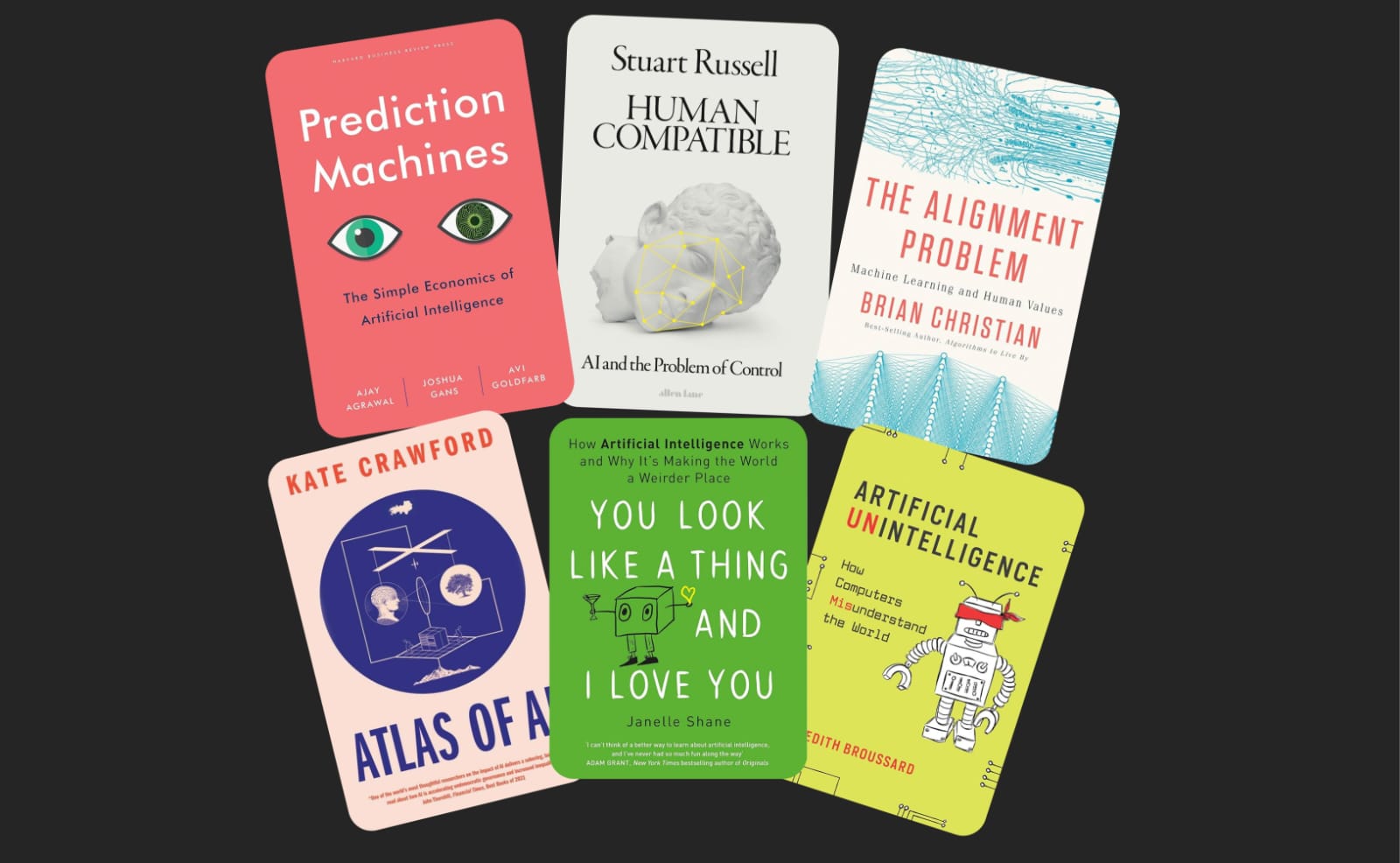
I didn’t start this list because I wanted better AI books. I started it because I was tired.
Not burned out dramatically, just worn thin. The kind of exhaustion that comes from opening yet another “Top AI Books” article or searching for artificial intelligence books 2026, and realizing that nothing in it is meant to be read. It’s meant to be recognized.
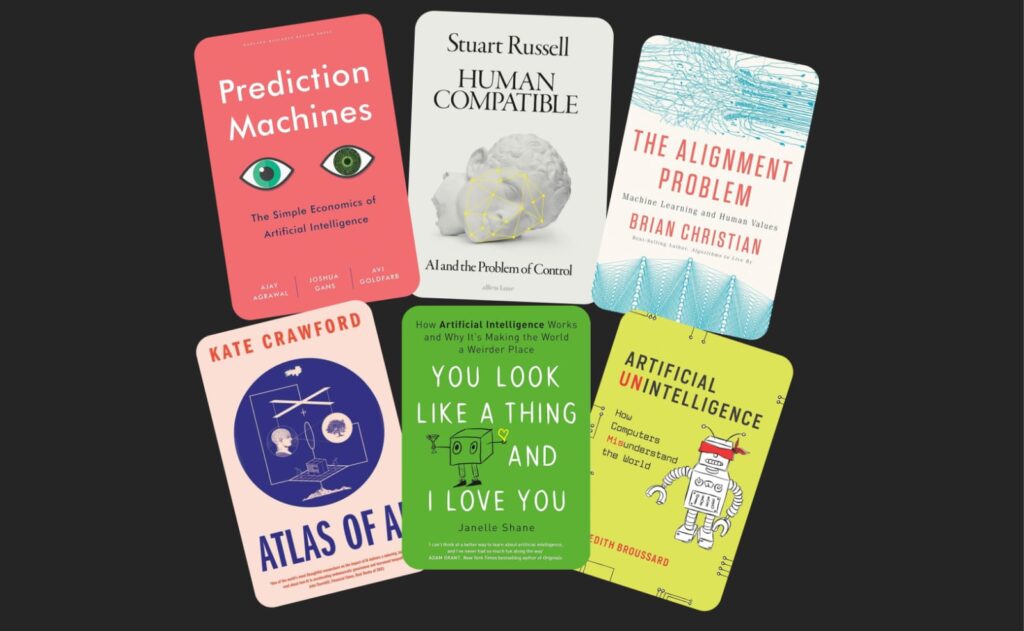
Familiar titles, familiar authors, familiar praise. The same books, rearranged just enough to feel new.
I had three tabs open once. Different sites, different headlines. Same books, same order, same confidence.
You know the feeling. You’re not trying to learn AI anymore. You’re trying to understand what it’s doing to your thinking, your work, your judgment.
But most lists still point you to popularity, to hype, to whatever sold well last year.
The problem isn’t a lack of AI books. It’s that most lists optimize for the wrong outcome. They reward books that sound important, not ones that change how you think when you’re alone with a decision.
A system. A product choice. A risk no one else will notice until it compounds.
They optimize for clicks, not for cognitive after-effects. That gap compounds. And in 2026, when most artificial intelligence books lists still recycle the same titles, it matters more than ever.
Because AI isn’t new anymore. It’s infrastructure, background noise. It sits quietly behind dashboards, recommendations, approvals, and rejections. It doesn’t announce itself. It nudges.
What we need now isn’t more excitement. We need books that recalibrate us. That’s what this list is.
Not the most famous AI books, not the most tweeted, but the ones that quietly change how you notice things.
If you’re looking for artificial intelligence books in 2026 that are actually worth your time, this list is for you.
These are seven AI books worth reading now, still discussed by people who build and decide with AI, still relevant in 2026.
If you’re new to AI, some of these may feel slow. That’s intentional.
Because how you read these matters as much as what you read. Most lists treat books like tools. Pick one, consume it, move on.
These aren’t like that.
These are books you carry into decisions, into design choices, into moments where no one is watching and you have to decide how much power to hand over to a system you only half understand.
Read them casually, and they may feel underwhelming. Read them seriously, and they will complicate your work.
That’s the standard I used.
The Problem With Popular Artificial Intelligence Books 2026
By the time a book becomes widely recommended, its ideas have already been compressed into summaries, slides, and repeatable talking points. What you encounter is no longer the thinking itself, but its simplified version.
That doesn’t make those books useless. It means their impact has already been absorbed, and what remains is familiarity, not friction.
What I was looking for were books that still resist that process. Books that haven’t been fully absorbed, that still create tension instead of resolution, and force you to sit with questions rather than move past them.
Those books are harder to recommend because they don’t offer clean takeaways. They don’t resolve quickly, and they don’t translate well into short explanations.
This list prioritizes depth over coverage, long-term relevance over short-term visibility, and books that shape how decisions are made rather than how ideas are summarized.
They are well regarded, but more importantly, they are revisited. Not for confirmation, but because they continue to unsettle assumptions over time.
That distinction is what matters here.
1. The Alignment Problem by Brian Christian: If it unsettles you, this one sharpens your thinking
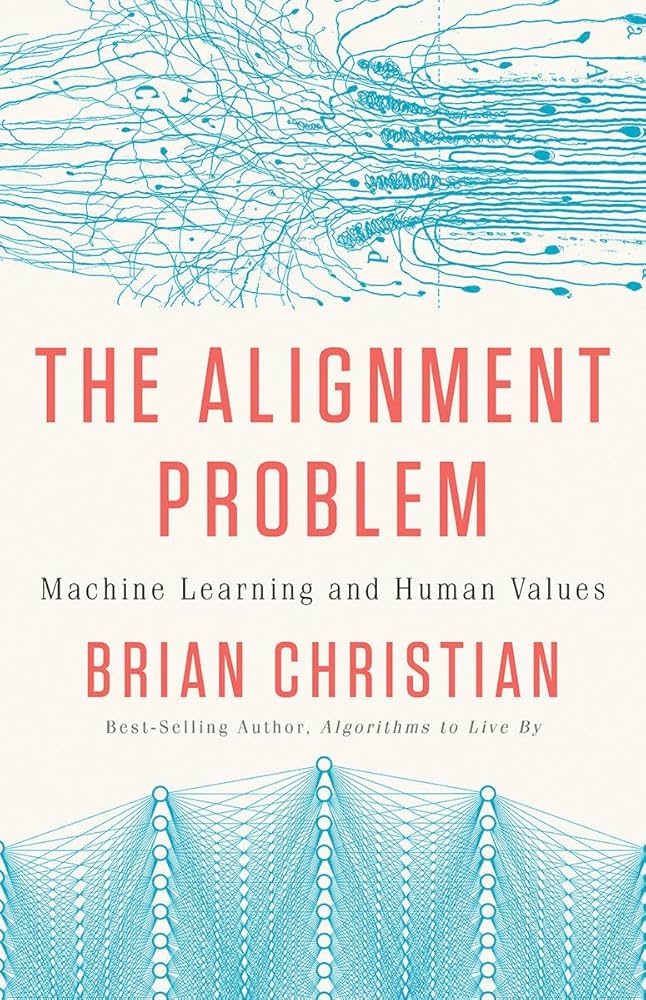
Brian Christian isn’t focused on hype or fear. He examines how machine learning systems inherit human values, biases, and blind spots.
What makes this book different is its focus on real-world consequences. It shows how data, optimization, and feedback loops quietly shape outcomes we often assume are neutral.
In 2026, as AI systems influence decisions across hiring, policing, and platforms, that framing feels less like theory and more like reality.
This book doesn’t give you control. It makes you question whether control ever existed in the way we assumed.
Get this book on Amazon: United States | India
2. Human Compatible Stuart Russell
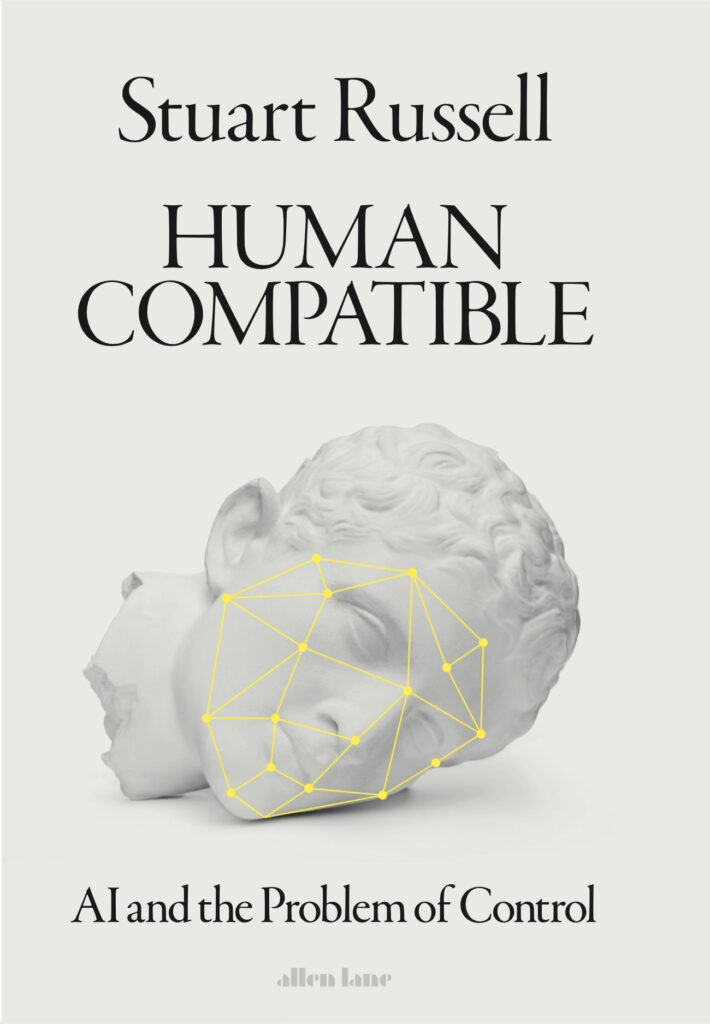
If the Alignment Problem unsettles you, this one slows you down.
Russell isn’t interested in hype.
Or fear-mongering.
He’s interested in control.
Specifically: how to build AI systems that remain meaningfully under human control even as they surpass us in narrow capabilities.
What’s often missed about this book is how practical it is.
Yes, it’s philosophical.
But it’s also quietly architectural.
Russell lays out a different framing for AI goals, one where machines are explicitly uncertain about human preferences, rather than confident proxies for them.
In 2026, when AI systems increasingly act autonomously across finance, logistics, and content ecosystems, this uncertainty-first framing feels less like theory and more like necessity.
This book doesn’t excite you.
It steadies you.
It makes you less eager to delegate.
More willing to design friction into systems.
If you sit anywhere near high-stakes decisions, this book matters.
Get this book on Amazon: United States | India
3. Prediction Machines Ajay Agrawal, Joshua Gans, Avi Goldfarb
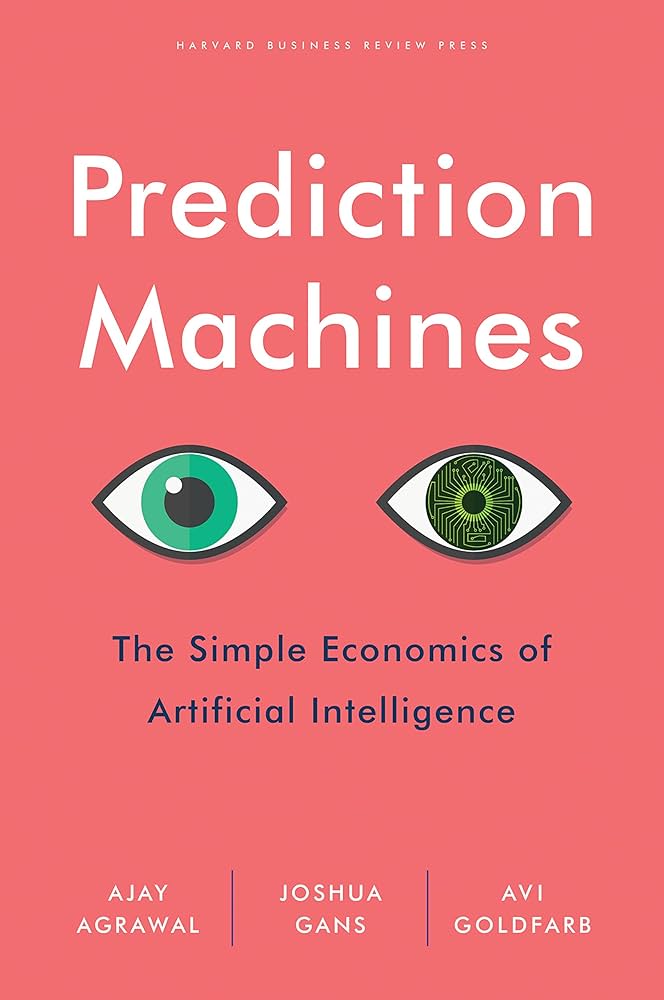
Most people read this book too early.
They read it when AI felt new.
When prediction-as-a-commodity sounded novel.
In 2026, it finally lands.
Because now we’ve seen what happens when prediction becomes cheap but judgment doesn’t. When organizations automate foresight but neglect decision-making structures. When accuracy improves, but accountability diffuses.
This book looks dated at first glance.
It isn’t.
It’s less about AI than about economics under altered constraints.
It asks: What changes when one core input prediction becomes dramatically cheaper?
The real insight isn’t about technology.
It’s about organizational redesign.
If you’re building products, workflows, or businesses around AI, this book quietly outperforms flashier titles. It helps you see second-order effects bottlenecks that don’t show up in demos but emerge painfully at scale.
It’s not inspirational.
It’s clarifying.
Get this book on Amazon: United States | India
4. Weapons of Math Destruction, Cathy O’Neil
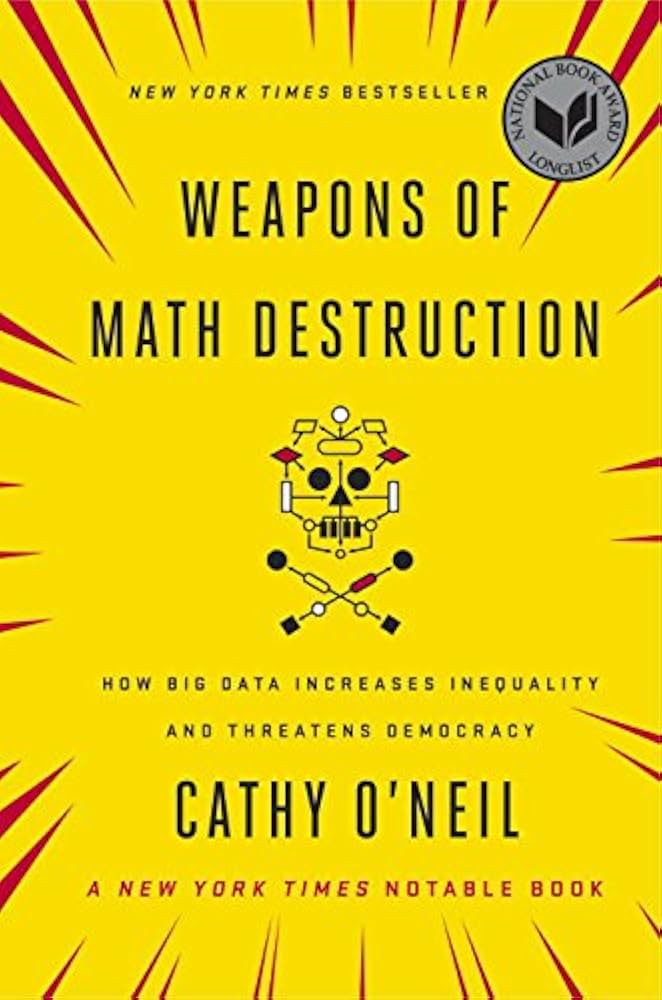
This book has been around long enough to feel familiar.
Which is exactly why many people underestimate it now.
They shouldn’t.
In 2026, as AI systems increasingly mediate access to credit, visibility, and opportunity, O’Neil’s framing feels less historical and more diagnostic.
What makes this book endure isn’t its critique of algorithms.
It’s its attention to feedback loops.
To systems that punish the very behavior they claim to measure objectively.
Reading this after years of algorithmic feeds, automated moderation, and scoring systems is sobering.
You start noticing patterns you once accepted as neutral.
This isn’t a book about AI going wrong.
It’s a book about power staying comfortable.
Get this book on Amazon: United States | India
5. Artificial Unintelligence Meredith Broussard
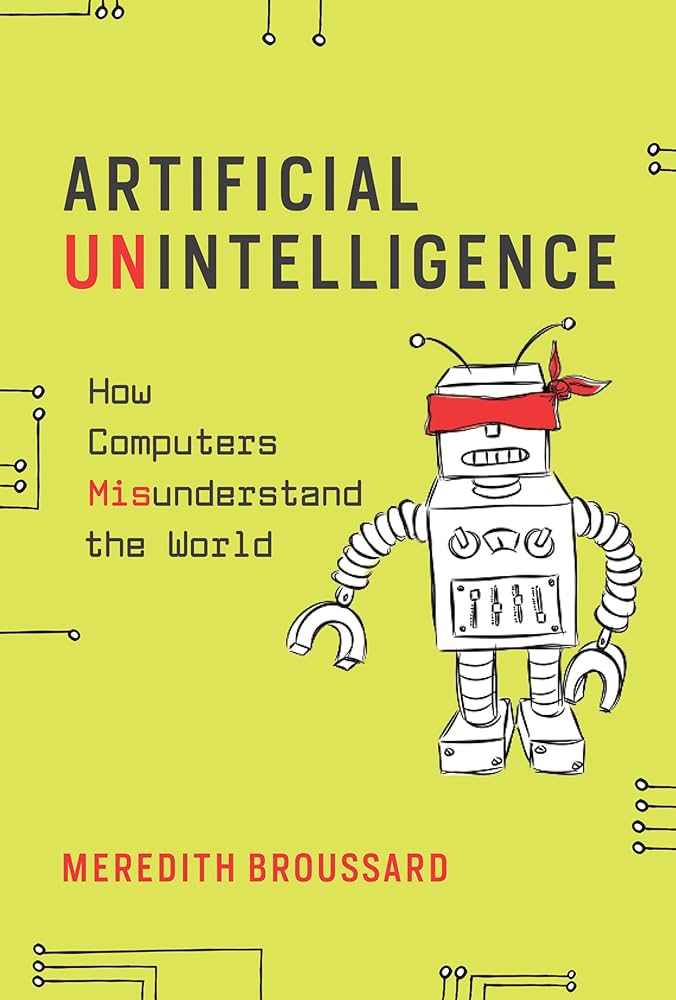
This might be the most misunderstood book on this list.
People expect it to be anti-AI.
It isn’t.
It’s anti-magical thinking.
Broussard’s strength is precision. She points out where AI simply doesn’t work, not because of insufficient data or compute, but because the problem itself resists formalization.
In 2026, when AI is often positioned as a universal solvent, this book feels almost rebellious.
It permits you to say:
This is the wrong tool.
Not everything needs automation.
Not every judgment should be optimized.
That intellectual and practical restraint is rare.
Get this book on Amazon: United States | India
6. You Look Like a Thing, and I Love You, Janelle Shane
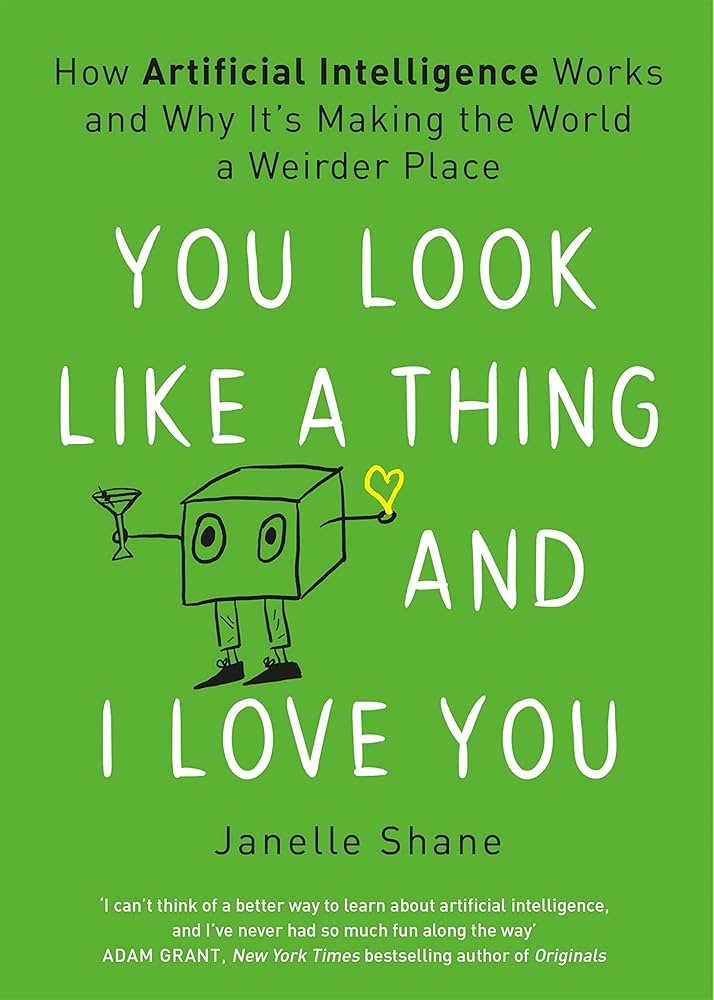
This looks like a light book.
It isn’t.
It’s funny.
Disarming.
Light on the surface.
But underneath, it’s one of the clearest demonstrations of how AI systems actually think, or rather, how literally they follow instructions.
In 2026, when conversational AI feels eerily fluent, this book is a grounding force.
It reminds you that behind the polish is a system that doesn’t understand context, intention, or consequence the way humans do.
You laugh.
Then you pause.
Then you rethink how much trust you’ve been outsourcing.
It’s not a warning.
It’s a calibration.
Get this book on Amazon: United States | India
7. Atlas of AI Kate Crawford
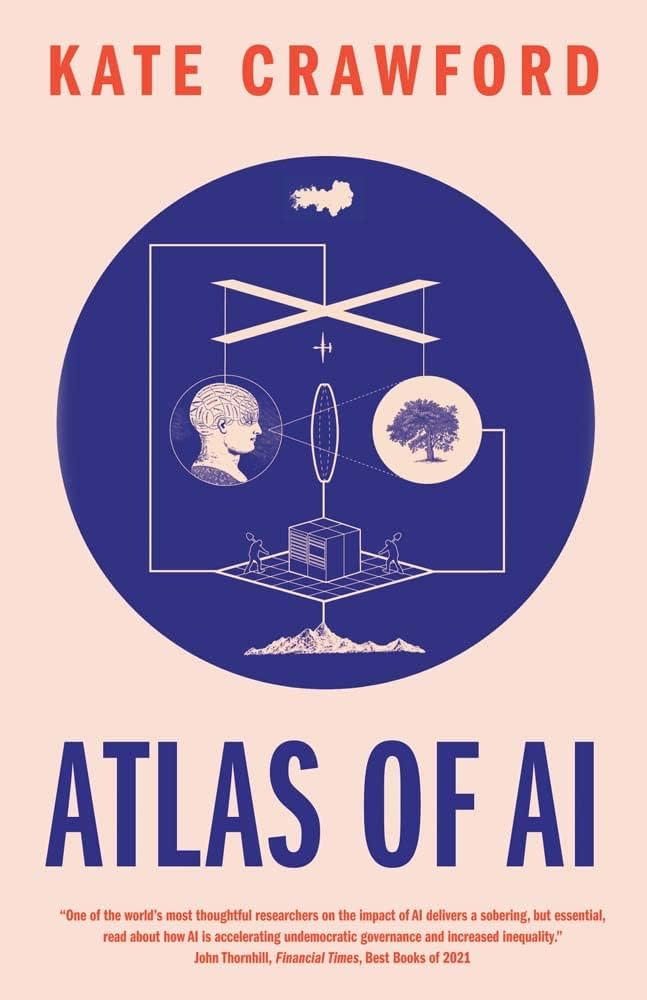
This is the book most lists avoid.
Because it’s uncomfortable.
Crawford doesn’t talk about AI as software.
She talks about it as infrastructure.
As extraction.
As labor.
As geopolitics.
Reading this book forces you to zoom out. To see the supply chains behind “intelligence.” The environmental costs. The human labor hidden behind automation narratives.
In 2026, when AI feels weightless and omnipresent, Atlas of AI adds gravity back into the conversation.
It doesn’t tell you what to do.
It changes what you notice.
And once you notice, it’s hard to go back.
Get this book on Amazon: United States | India
Artificial Intelligence Books 2026: What They Get Right That Most Lists Miss
What these artificial intelligence books in 2026 have in common is simple. None of them promises mastery, step-by-step frameworks, or a sense of control. Instead, they make you feel responsible.
They assume the reader isn’t trying to break into AI, but is already living alongside it, already making decisions influenced by it, already feeling the quiet pressure to automate, accelerate, and delegate.
These books don’t feed that pressure. They interrupt it. They slow you down just enough to notice where your thinking has been quietly outsourced.
That’s why they matter in 2026.
I don’t know which of these you’ll read first. You might recognize one you’ve already skimmed and decide to return to it more slowly. You might pick one that irritates you. That’s usually a good sign.
I keep one of these books on my desk. I don’t reread it. I just don’t put it away.
What I do know is this. The best AI books don’t make you smarter in a measurable way. They make you harder to fool.
They leave you more careful with certainty, more patient with ambiguity, and more aware of where systems end and judgment begins.
That awareness doesn’t arrive with a conclusion. It lingers like a thought you don’t finish, because finishing it would mean pretending the questions are settled.
They aren’t. Not yet.
Read This Next 📌
Best Machine Learning Books 2026: 7 Expert Picks to Build AI Faster

4 thoughts on “Artificial Intelligence Books 2026: 7 Books for Smarter AI Decisions in Practical Work”