
Looking for the best deep learning books in 2026? The real problem isn’t a shortage of books, it’s picking one that fits your level and isn’t outdated, overly theoretical, too basic, or not really about deep learning at all.
This guide sorts through that mess so you don’t have to dig through Reddit threads and Medium lists. Below are the best picks for beginners, Python developers, researchers, and AI engineers, along with the top free, practical, and LLM-focused books.
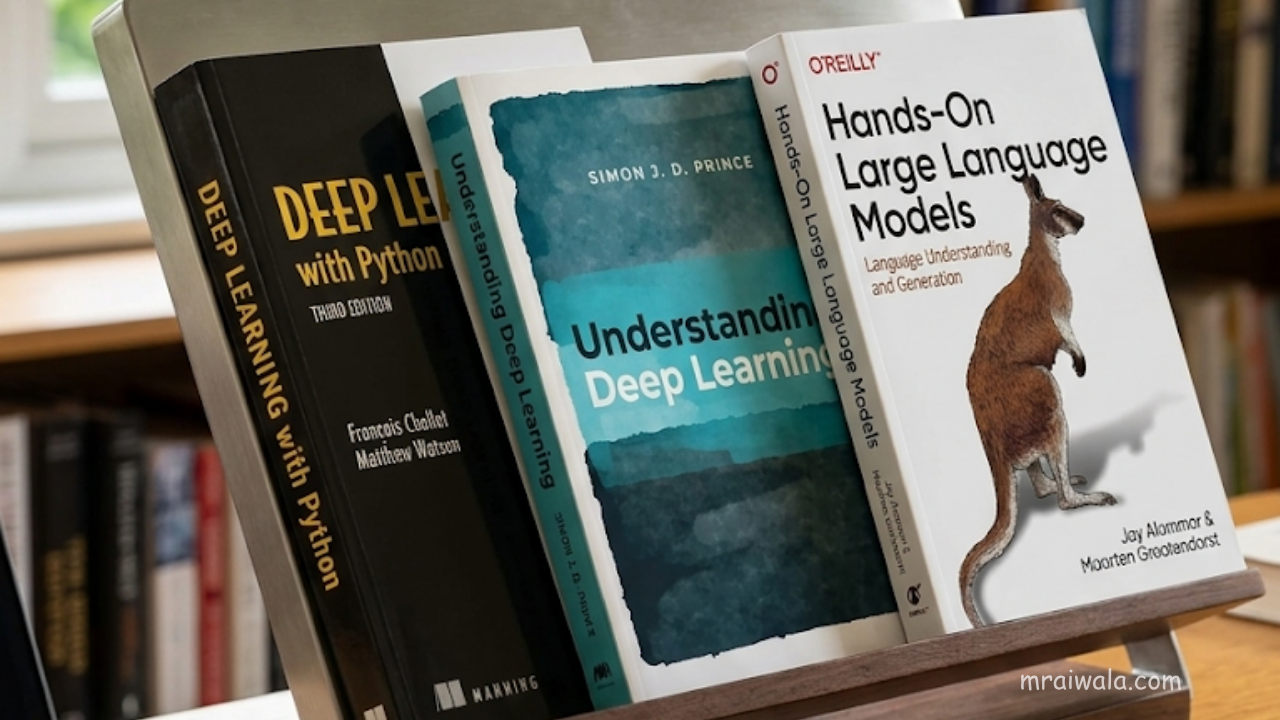
Quick answer: For one practical book, start with Deep Learning with Python. For solid theory, go with Understanding Deep Learning (it’s free). For LLMs and AI applications, pick Hands-On Large Language Models.
Quick Comparison Table
| Book | Best For | Level | Framework | Buy on Amazon |
| Deep Learning with Python | Python developers, beginners | Beginner | Keras/TF | US | INDIA |
| Understanding Deep Learning | Modern theory | Intermediate–Advanced | Agnostic | US | INDIA |
| Deep Learning (Goodfellow) | Foundational theory | Advanced | Agnostic | US | INDIA |
| Dive into Deep Learning | Free modern DL | Beginner–Intermediate | PyTorch/TF | US | INDIA |
| NLP with Transformers | Transformers/NLP | Intermediate | PyTorch/HF | US | INDIA |
| Generative Deep Learning | GenAI | Intermediate | Keras/TF | US | INDIA |
| Hands-On Large Language Models | LLM apps | Intermediate | PyTorch/HF | US | INDIA |
| Deep Learning with PyTorch | PyTorch fluency | Intermediate | PyTorch | US | INDIA |
| Neural Networks and Deep Learning | Beginners | Beginner | None | US | INDIA |
| Hands-On ML | Practical ML+DL | Beginner–Int | Keras/TF | US | INDIA |
| Deep Learning: Foundations and Concepts | Probabilistic ML | Advanced | None | US | INDIA |
Last two rows = Bonus ML picks broader than deep learning, but commonly referenced alongside it.
Why this list isn’t like the others
You already started. That’s the problem. You’ve done the Andrew Ng course, written some code that worked without you fully understanding why, and now you’re at this strange middle place where tutorials feel too shallow, and research papers feel like a different language.
Most “best deep learning books” lists quietly mix general machine learning books into the deep learning category, then don’t tell you.
You end up buying something that covers decision trees and SVMs when you wanted transformers and neural networks. I’ve flagged that clearly here.
I also went through threads on r/MachineLearning, r/learnmachinelearning, and r/deeplearning to see what practitioners repeatedly recommend, not what looks good in a roundup.
Compared Amazon ratings, checked which books appear in recent university syllabi, and filtered by framework relevance in 2026. Books that show up everywhere in those threads tend to show up for real reasons.
The honest state of things in 2026
PyTorch has essentially won the framework war. TensorFlow is still maintained and widely used in production, but most new research and new tooling now live in PyTorch. TensorFlow-first books are still readable, the concepts transfer, but expect some friction if you’re starting fresh in 2026.
More importantly, transformers are no longer a specialised topic. They’re the default architecture across text, image, audio, and multimodal tasks now. Any deep learning book written before 2018 that skips attention mechanisms is telling you half the story.
Generative AI, LLMs, and agents aren’t niche anymore either. The best deep learning books for self-study in 2026 are the ones that don’t pretend the field stopped at CNNs.
The 9 Deep Learning Books
1. Deep Learning with Python Francois Chollet
Best for Python developers and practical beginners
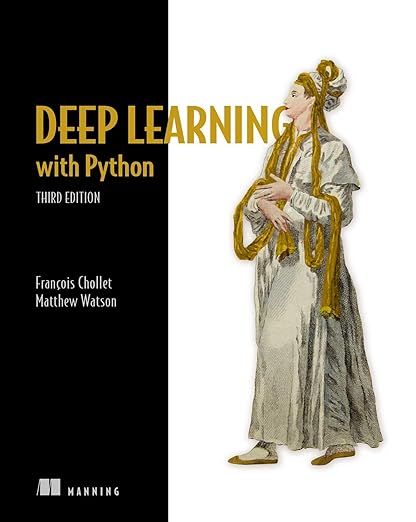
Chollet wrote Keras. So when he explains something, you trust that he knows where the confusion actually lives.
The second edition is significantly more current than the first. It covers transformers, text generation, and touches on diffusion models. The code examples run. The explanations don’t waste your time on unnecessary formalism.
This is the best book to learn deep learning with Python, not because it’s the most comprehensive, but because it’s the most honestly scoped. It knows what it’s trying to do and does it cleanly.
Reddit take: Consistently one of the top three recommended books in r/learnmachinelearning threads when someone asks where to start with DL. “Chollet’s book is the one I actually finished” comes up more than once.
Limitation: Keras/TensorFlow focus. If you’re going with PyTorch, supplement the framework side.
Get this book on Amazon: United States | India
2. Understanding Deep Learning Simon J.D. Prince
Best modern theory book, more current than Goodfellow
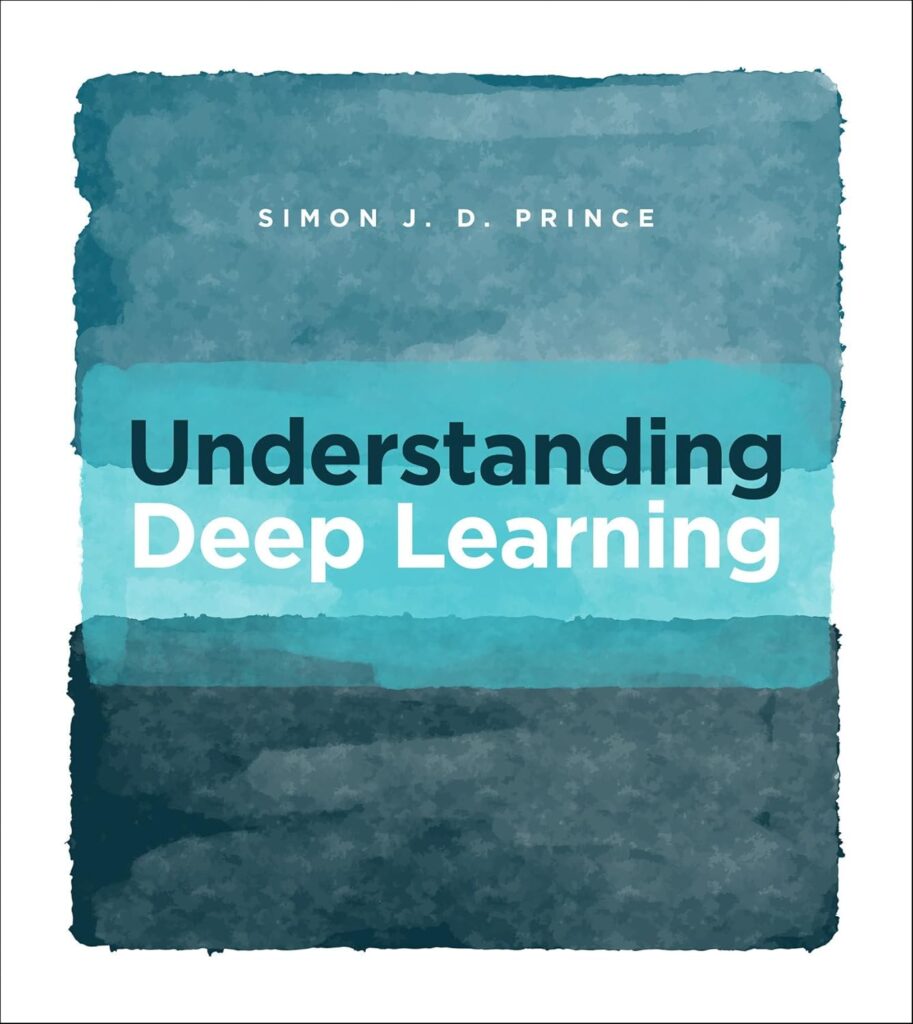
This came out in late 2023, and it’s the most complete theoretical treatment of modern deep learning available right now.
It covers transformers, diffusion models, and graph neural networks, things the Goodfellow book simply doesn’t include because they didn’t exist yet.
The math is serious. But the explanations are clearer than most books at this level. Free at udlbook.github.io.
If someone asks what single book covers the theory of deep learning as it actually exists in 2026, this is it. It has quietly become the book I’d recommend over Goodfellow for most purposes.
Best for: Researchers, serious practitioners, people who want to understand why transformers work, not just how to use them.
Get this book on Amazon: United States | India
3. Deep Learning Goodfellow, Bengio, Courville
The Bible uses it as a reference, not a cover-to-cover read
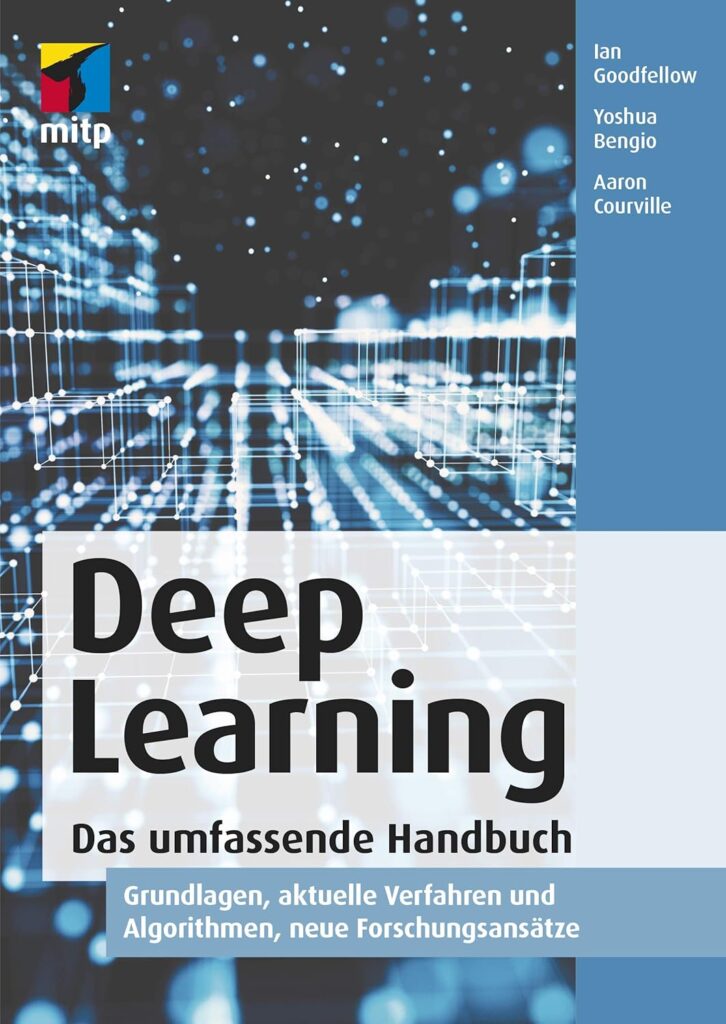
This is the book people recommend most and finish least. That’s not entirely unfair. It’s dense, mathematical, and Chapter 2 will test your patience.
But here’s what gets missed: you don’t read it linearly. You use it when you need a rigorous explanation of something specific, vanishing gradients, regularisation, optimisation, and you want the real treatment, not a YouTube analogy.
One honest gap: it predates transformers. No attention mechanism chapter, no coverage of modern LLMs. For foundational theory on classical deep learning, it remains authoritative. For anything post-2017, Prince’s book covers it better.
Free at deeplearningbook.org.
Reddit take: In r/MachineLearning, Goodfellow is commonly recommended as a reference text alongside more practical books, but rarely as a standalone starting point. “Read it when you hit a concept you don’t understand” is the recurring advice.
Best for: Graduate students, people who read papers regularly, and anyone who finds hand-wavy explanations unsatisfying.
Get this book on Amazon: United States | India
4. NLP with Transformers — Lewis Tunstall, Leandro von Werra, Thomas Wolf
The one transformers book that still holds up for 2026
Most deep learning book lists skip this one, which is odd because all three authors worked on Hugging Face Transformers itself. That matters: this isn’t a generic AI book with a transformers chapter bolted on; it’s written by the people who built the library.
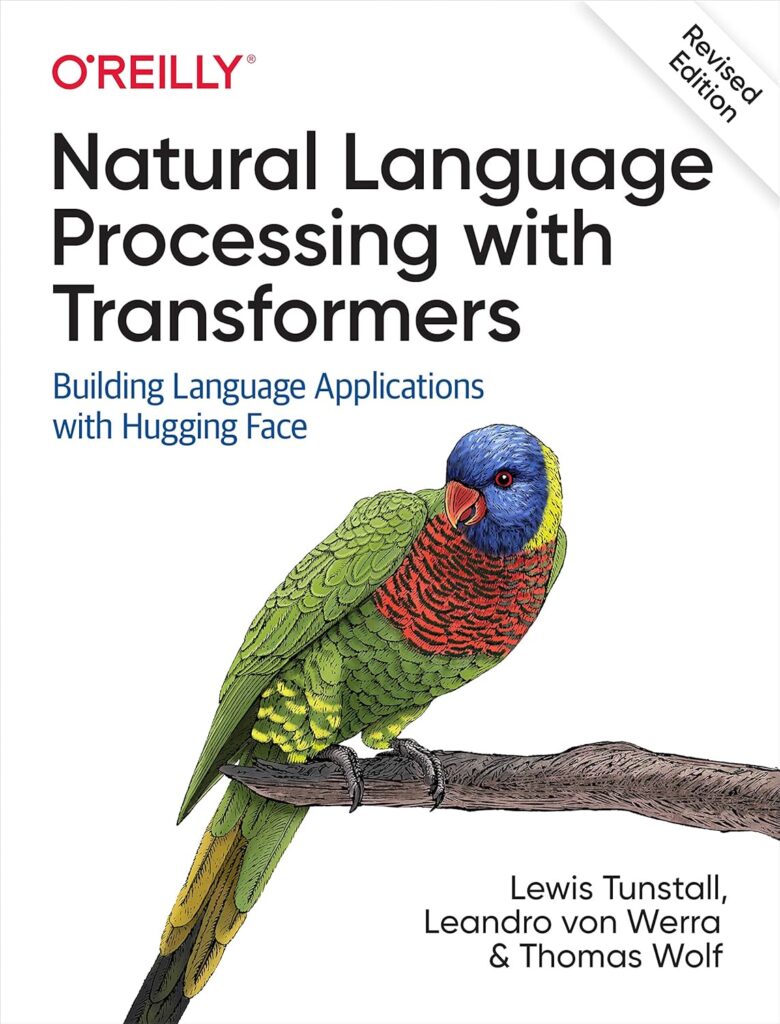
The book, updated as the Revised Edition, walks through BERT and GPT-style models, token classification, question answering, translation, and summarisation, all using the actual Hugging Face codebase. One honest note: it focuses on transformer fundamentals and the Hugging Face ecosystem, not on newer chat-style LLM tooling like agents or RAG pipelines. If you want to understand how transformer models actually work in code, not just in theory, this is still the clearest bridge between the two, even a few years after release.
It’s also the quiet favourite in NLP-focused Reddit discussions, usually mentioned alongside Chollet’s book. The reason people give most often: it teaches you to actually use the ecosystem, not just the math behind it.
Best for: anyone working in NLP, anyone building on top of LLMs, anyone trying to get comfortable with the Hugging Face ecosystem.
Get this book on Amazon: United States | India
5. Dive into Deep Learning d2l.ai
Best free deep learning book for self-study. If you actually finish it,
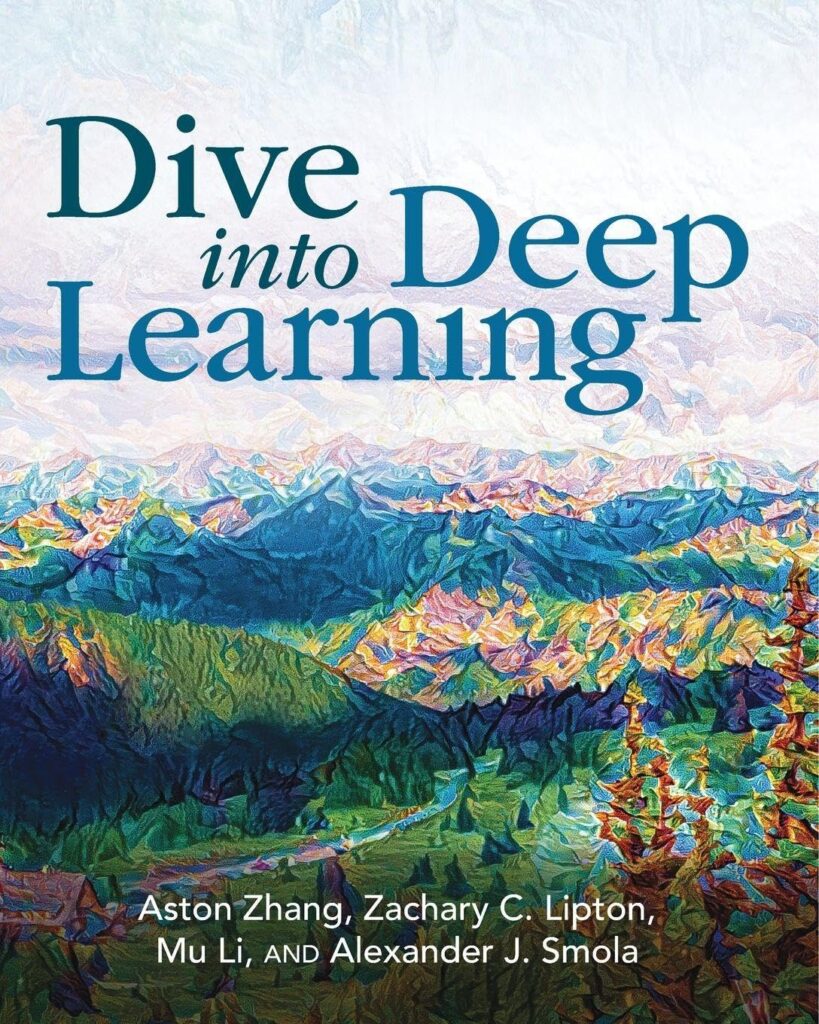
d2l.ai is remarkable. A full textbook, free, updated regularly, available in both PyTorch and TensorFlow. The math and code live side by side; you’re not reading theory in one chapter and running code in another.
The attention and transformer chapters are among the best explanations of those architectures available in any book.
Be honest with yourself, though: this is long and demanding. Most people start it and stop around chapter 7. That’s fine, even the first third gives real value.
If you’re looking for the best deep learning books for beginners, Reddit recommends this one as a free option; it consistently comes up, but “free” doesn’t automatically mean easiest to finish.
Best for: Self-directed learners comfortable with math. People who want to understand modern architecture, not just use it.
Get this book on Amazon: United States | India
6. Generative Deep Learning David Foster
Best for GenAI, the book that has aged best into 2026
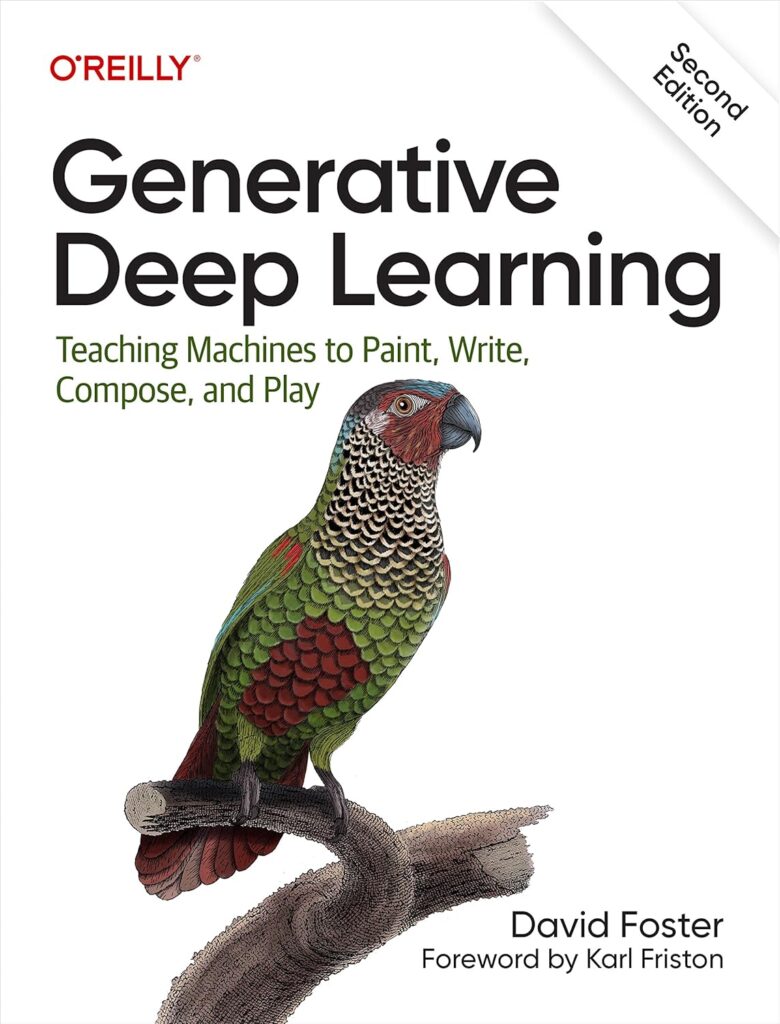
Covers VAEs, GANs, diffusion models, transformers, and generative text. The second edition is current enough to matter. If you’re trying to understand how Stable Diffusion works, or how text generation models are structured, this is clearer than most alternatives.
Best for: Anyone working in or moving toward generative AI. Engineers building on top of these models who want to understand what’s underneath.
Get this book on Amazon: United States | India
7. Hands-On Large Language Models Jay Alammar & Maarten Grootendorst
Best for LLM applications, the most practically relevant pick of 2026
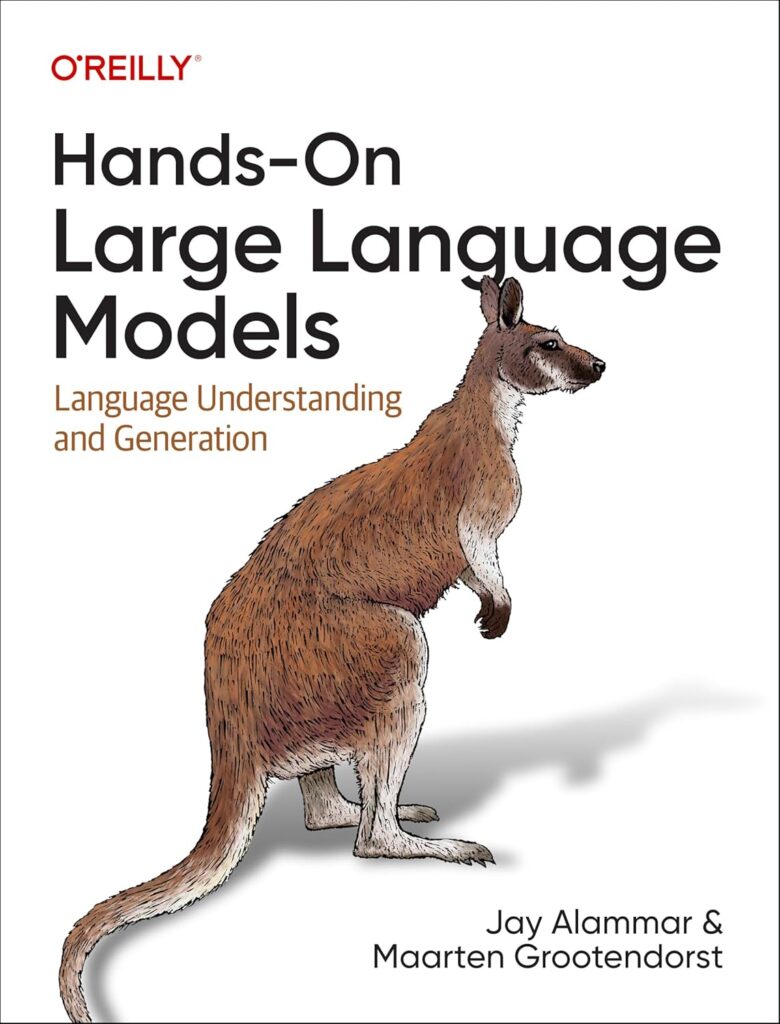
Embeddings, fine-tuning, prompt engineering, RAG, and how to actually use and adapt LLMs in real applications. Alammar’s visual explanations are well-known from his blog. The book extends that style into a full treatment of the LLM stack.
It doesn’t require you to understand all of deep learning first. It meets you where the industry actually is. If your goal is building AI-powered applications rather than researching model architectures, start here and go backward into foundations as you need them.
Best for: Developers building on top of LLMs. Anyone who wants practical LLM skills without a research background.
Get this book on Amazon: United States | India
8. Deep Learning with PyTorch Stevens, Antiga, Viehmann
Best for PyTorch users specifically
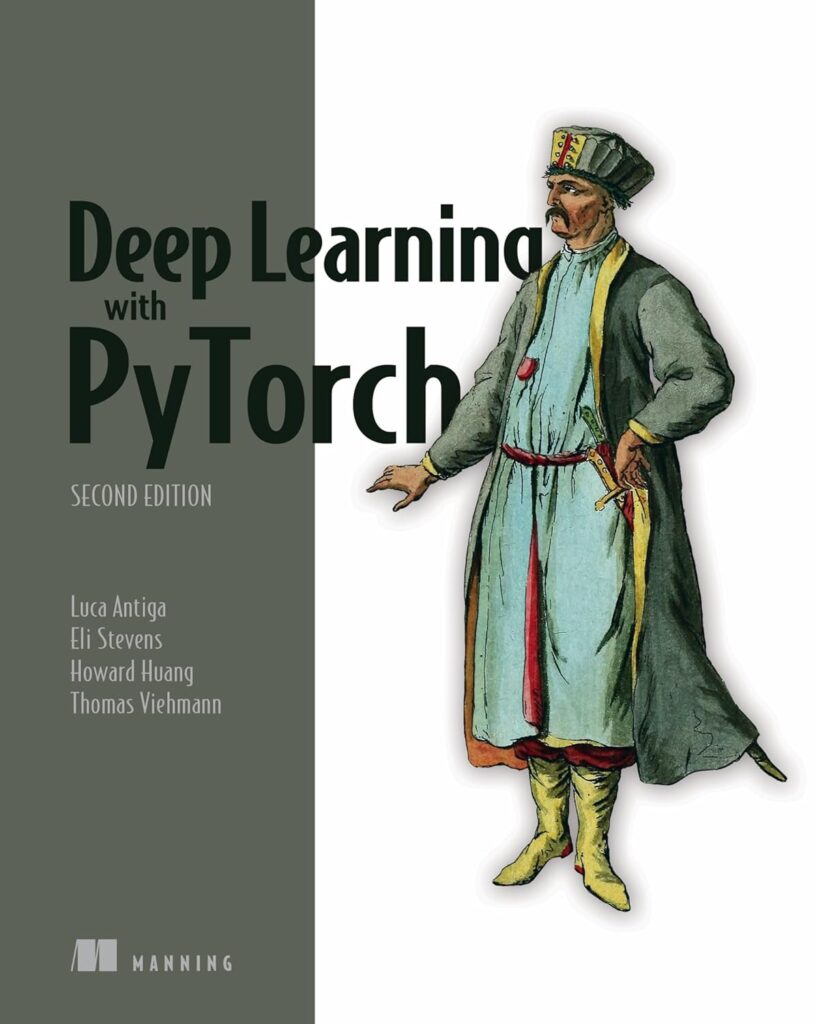
Goes past the official tutorials into data pipelines, model debugging, deployment basics, and the general philosophy of how PyTorch thinks about computation.
It’s not a beginner book; it assumes you know what you’re building. But if you know the concepts and want to go deep on PyTorch specifically, this reduces a lot of confusion.
Best for: Intermediate learners who’ve committed to PyTorch. Researchers are writing custom training loops.
Get this book on Amazon: United States | India
9. Neural Networks and Deep Learning Michael Nielsen
Best for absolute beginners and only them
Free at neuralnetworksanddeeplearning.com. Short. Beautifully written. Explains backpropagation better than anything else I’ve read. If you’re genuinely new to neural networks and confused about why any of this works, read this first. It’ll take a weekend.
Think of it as a foundation, not a destination. It covers the basics and some concepts. It won’t prepare you for modern work.
Best for: Complete beginners. Anyone who wants to understand backpropagation from first principles before touching a framework.
Get this book on Amazon: United States | India
2 Bonus ML Picks
These are not pure deep learning books. They’re broader machine learning texts that keep appearing in deep learning reading lists, usually because they build foundational thinking that makes DL concepts clearer. Flagging them separately so there’s no confusion.
Hands-On Machine Learning with Scikit-Learn, Keras & TensorFlow Aurélien Géron
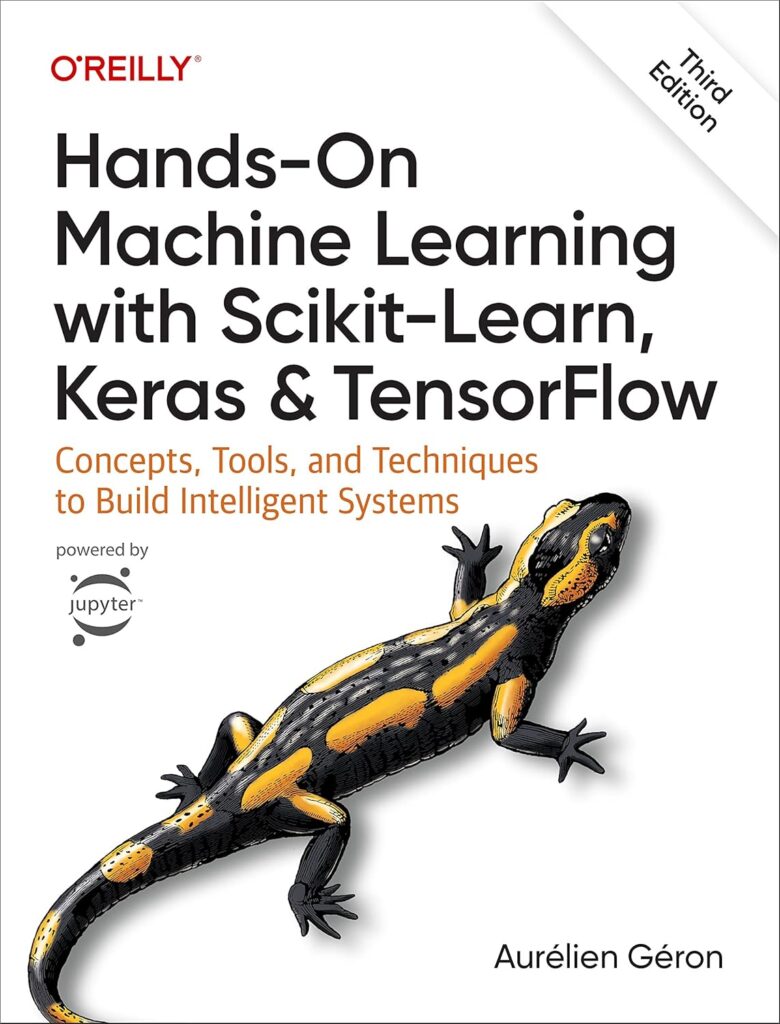
The best practical foundation if you want to understand the full ML pipeline before going deeper into neural networks. The third edition is solid. If you’re not sure whether you need ML fundamentals or pure deep learning, this tells you where your gaps are.
Reddit take: One of the most consistently recommended books in r/learnmachinelearning for years running. “Best overall starter” comes up repeatedly, usually alongside Chollet’s book.
Get this book on Amazon: United States | India
Deep Learning: Foundations and Concepts by Christopher M. Bishop
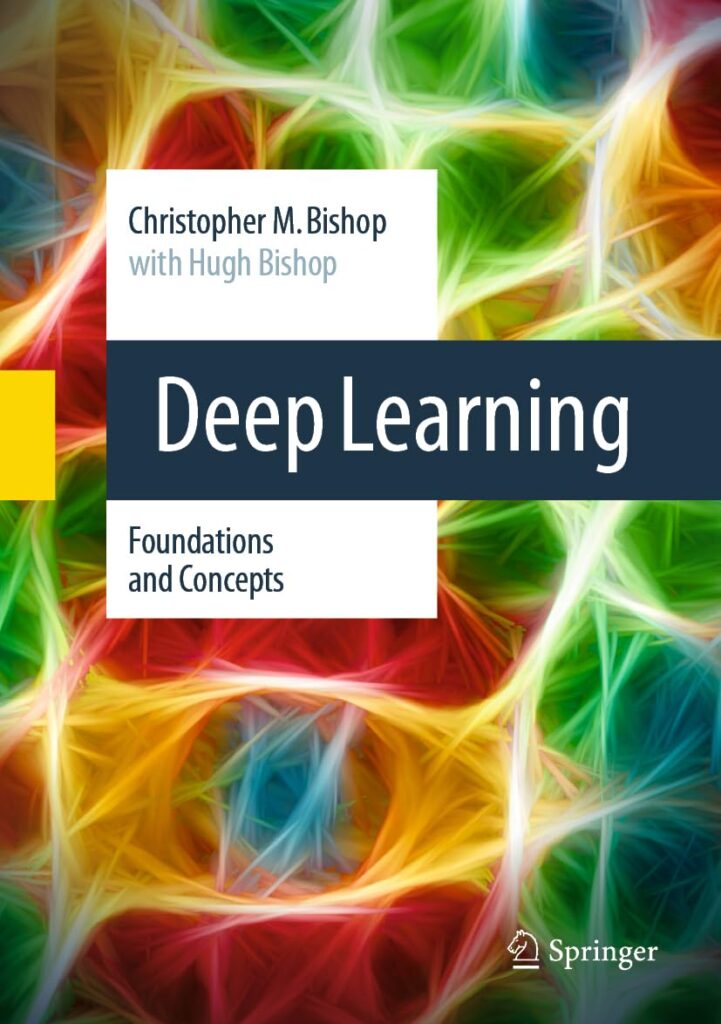
If you want a modern, future-proof deep learning book in 2026, this is one of the strongest picks. Deep Learning: Foundations and Concepts by Christopher Bishop covers core concepts, modern architectures, and practical applications in a clear, structured way.
Published in 2024, it stays relevant to today’s AI landscape while keeping a strong mathematical foundation. Unlike older theory-heavy books, it includes up-to-date topics without becoming overwhelming.
It’s ideal for researchers, serious students, and anyone looking for a modern alternative to classics like Goodfellow or PRML.
Get this book on Amazon: United States | India
What changed in deep learning between 2023 and 2026
LLMs have narrowed the gap between “understanding deep learning” and “building useful things with AI” more than before. Three years ago, you needed real foundational depth to build anything useful. Now you can ship a working AI application with far less of that depth, thanks to pre-trained models and better tooling.
Whether that’s good or bad depends on what you’re trying to do. If you want a job building AI products, this gap-narrowing works in your favour. If you want to understand the field deeply enough to debug it when it breaks, or to do original research, the foundational depth still matters, and skipping it will catch up with you eventually.
Books we left out and why
Grokking Deep Learning is good for intuition, dated examples, and won’t take you anywhere near current architectures.
Deep Learning Illustrated: Great visuals for early intuition, not enough depth past the beginner stage.
fast.ai The course is better than any book form of it. If you’re drawn to the fast.ai approach, do the course.
A decision tree to determine which book is actually for you
If you only read one book and want to build things: Deep Learning with Python.
If you hate math and want results fast: Deep Learning with Python → Hands-On Large Language Models.
If you love math and want to understand everything properly, Understanding Deep Learning (Prince) + Goodfellow as a reference.
If transformers and NLP are your focus: NLP with Transformers → Hands-On Large Language Models.
If GenAI is your specific focus: Generative Deep Learning → NLP with Transformers.
If you have no money to spend: Nielsen for intuition → d2l.ai for depth → Prince for modern theory. All free.
If you’ve already read books and still feel lost: You probably have a gap in either math or implementation practice, not a gap in the number of books you’ve read. Pick one specific confusion. Find the chapter in Prince or Goodfellow that addresses it. Don’t start something new.
FAQ: Best Deep Learning Books in 2026
What is the best deep learning book for beginners? Deep Learning with Python by Chollet is the most practical entry. Neural Networks and Deep Learning by Nielsen, if you want to be free and want to understand backpropagation before writing any code.
What is the best free deep learning book? Three good free options depending on where you are: Nielsen for introductory intuition, Dive into Deep Learning for modern comprehensive coverage, and Understanding Deep Learning by Prince for serious theory.
Is deep learning outdated in 2026? No, if anything, it’s more central than ever. What’s changed is which architectures matter. Transformers dominate across most domains now. Some older books focused only on CNNs and RNNs, telling you an incomplete story, but deep learning as a field is very much alive.
Is TensorFlow still worth learning in 2026? Worth knowing, not worth starting with. PyTorch is the default for new research and most new production systems. If you’re starting fresh, start with PyTorch. If your existing work uses TensorFlow, understand it properly; it runs a lot of production systems and isn’t going anywhere soon.
Should I learn PyTorch before reading deep learning books? Not necessarily. Learn the concepts first, or learn them in parallel. The worst approach is spending months on framework syntax before understanding what you’re actually building. Most good books give you enough framework context to follow along.
Which deep learning book is best for learning LLMs specifically? Hands-On Large Language Models for practical application. NLP with Transformers for understanding the architecture more deeply. Understanding Deep Learning by Prince provides the theoretical foundations of how attention works.
Which deep learning book is best for AI researchers? Understanding Deep Learning (Prince) for modern theory, Goodfellow for foundational theory, d2l.ai for implementations. Most active researchers use all three depending on what they’re looking up.
Are deep learning books still worth reading when there are so many courses? Yes. Courses are good for getting started. Books are good for understanding. The people who can reason clearly about why something isn’t working, not just follow tutorials, have almost always read carefully. Courses skip the hard-to-explain parts. Books don’t.
A thing that usually doesn’t get said
Most people buy two or three of these and read parts of all of them. That’s not a failure of discipline, that’s how you learn a technical field that moves this fast. You read enough to orient yourself, build something, get confused about something specific, then go back to the book for that one answer.
The mistake isn’t reading in this order. The mistake is waiting to finish one book before you start building, or building for months without ever going back to understand what you’re actually doing.
The books worth owning in 2026 are the ones you’ll return to, not the ones that look most complete on a shelf. If you’re still not sure where to start, scroll back to the decision tree above, find the line that matches your situation, and start there.
Read This Next 📌
Best Machine Learning Books 2026: 7 Expert Picks to Build AI Faster
7 Best Data Science Books in 2026 (Beginner to Advanced Guide)
Artificial Intelligence Books 2026: 7 Books for Smarter AI Decisions in Practical Work
